


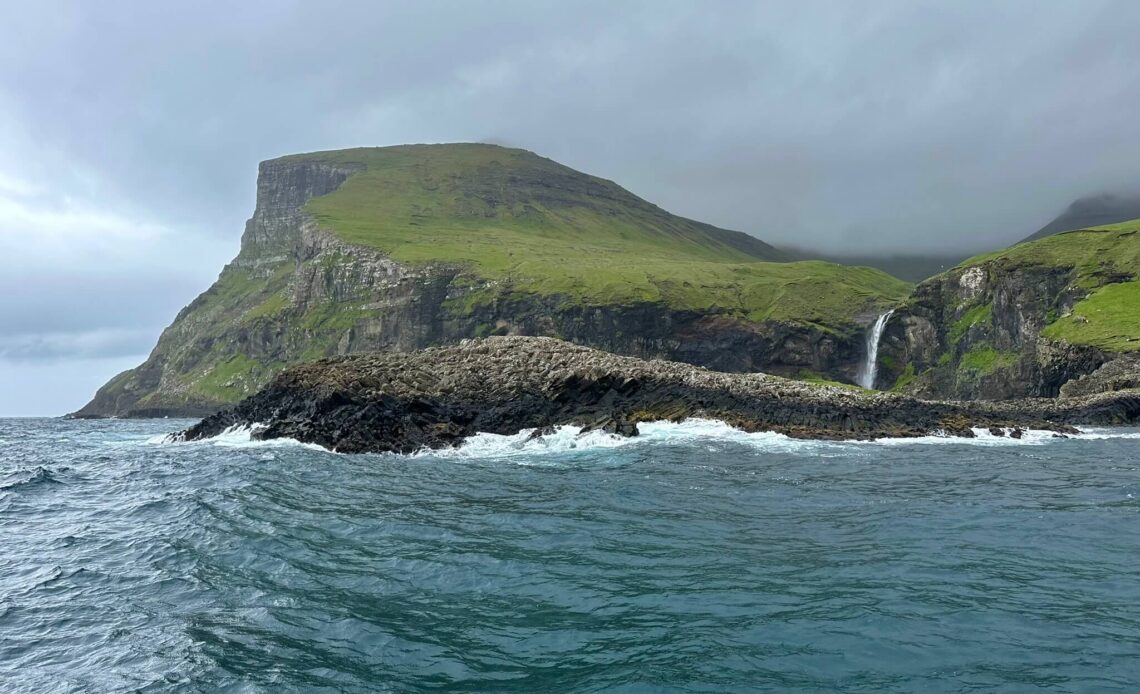
The Faroe Islands are not big, but there is a surprising amount to see. Think waterfalls that drop straight into the ocean, villages with turf-roofed houses, black beaches, short hikes with absurdly beautiful views and roads where you want to stop every five minutes for a photo.
We travelled around the Faroe Islands for 7 days with a rental car and our 8-month-old daughter. Because our baby got sick, we deliberately did not take ferries to extra islands such as Mykines or Kalsoy. That meant we mainly stayed on the main islands that you can reach by car. And honestly: even then, you already have more than enough to see.
In this blog, you will find our favourite attractions in the Faroe Islands, conveniently divided per island. So this is not a fixed day-by-day plan, but an overview of places we personally thought were worth visiting. Do you want to know how to combine these places logically? Then also read our 7-day Faroe Islands road trip itinerary.
Contents
Attractions on Vágar
Vágar is the first introduction to the Faroe Islands for many travellers, because this is where the airport is located. But the island is much more than just your arrival point. You immediately find some of the best-known places in the Faroe Islands here: Múlafossur, Bøur, Drangarnir and Sørvágsvatn.
Múlafossur Waterfall
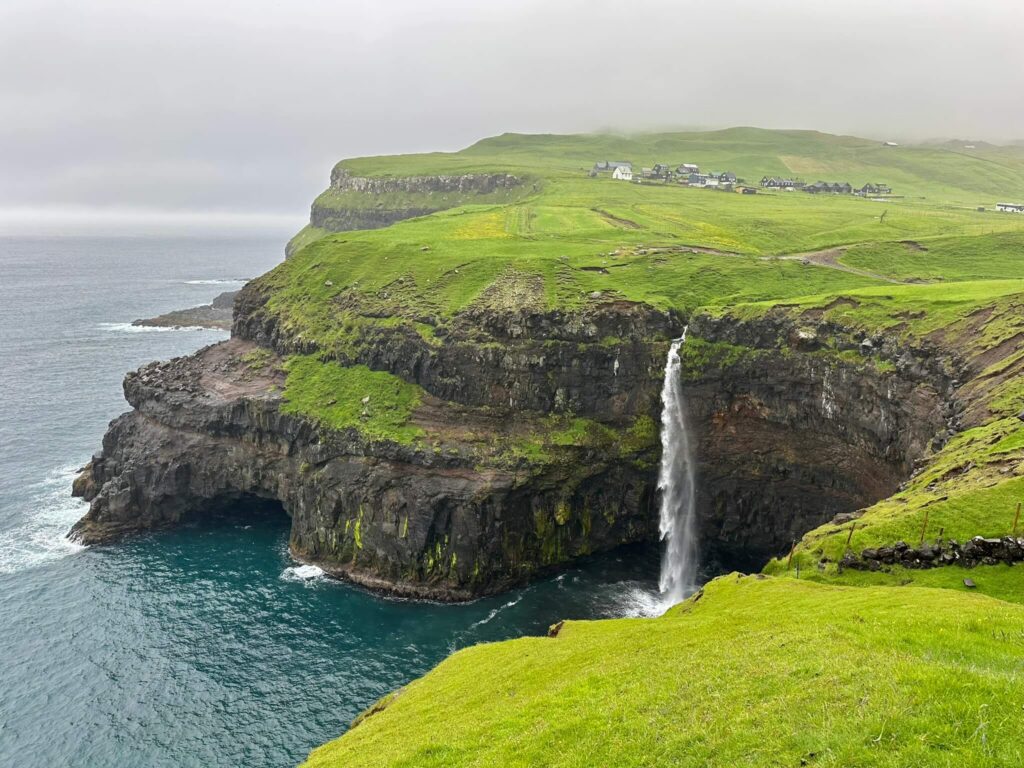
Múlafossur Waterfall may be the easiest must-see in the Faroe Islands. You park near Gásadalur, walk for a few minutes and stand at a waterfall that drops from a green cliff straight into the ocean.
We visited Múlafossur straight away on our first day. Rain, wind, suitcases not yet packed in any useful way and a baby who had definitely had enough of flying. Still, this was a lovely first stop. Not because you spend hours here, but precisely because it is so quick and beautiful.
Bøur
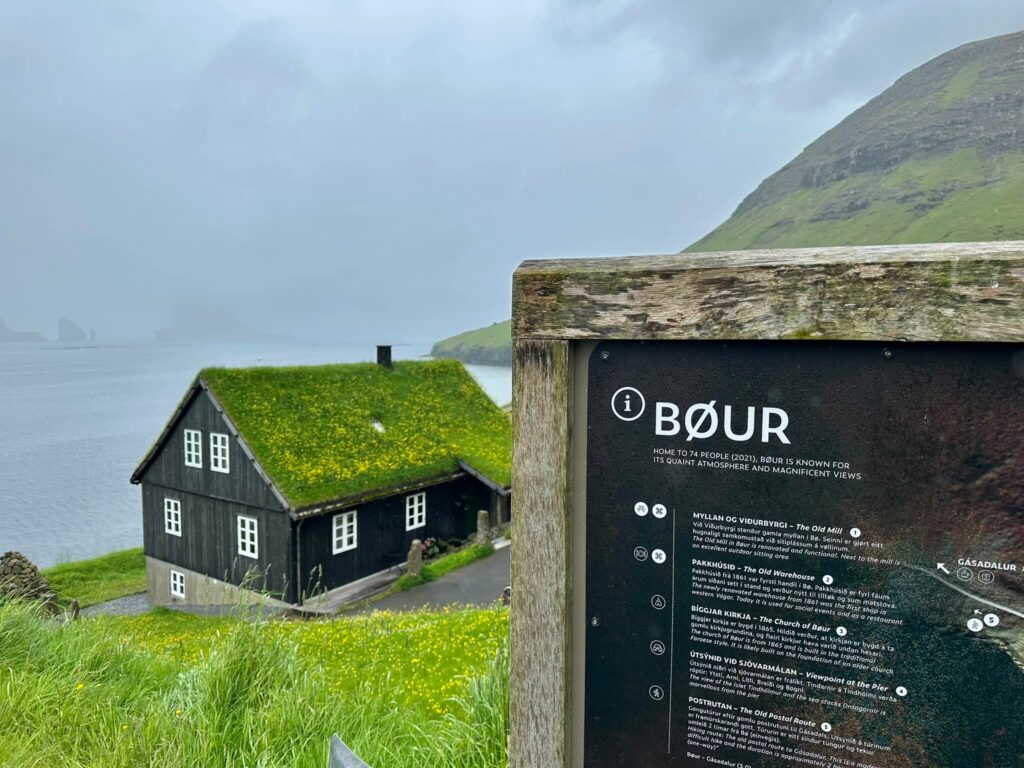
On the way to Gásadalur, you pass Bøur. This small village is beautifully located, with views towards Tindhólmur and Drangarnir. You do not have to turn it into a big programme, but we thought it was a nice short photo stop.
It is one of those places where you get out for a moment, look around, take a few photos and continue driving. And yes, Bøur is also the only place name that a cow can pronounce. Silly, but you will not forget it again.
Drangarnir
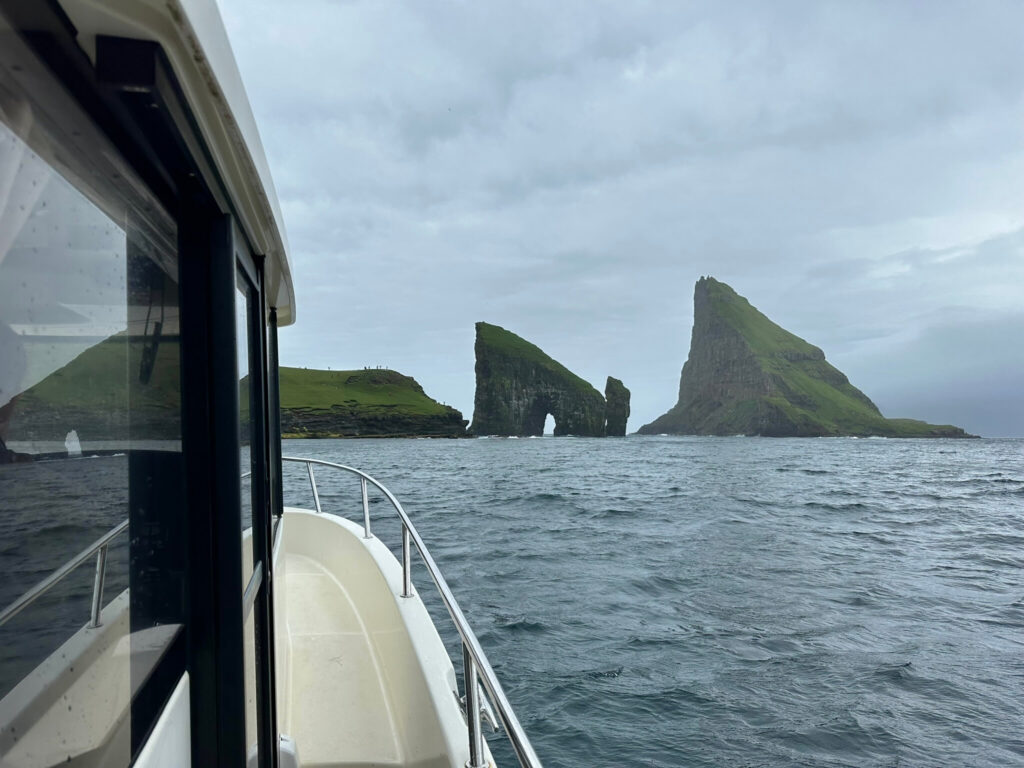
Drangarnir is one of the best-known rock formations in the Faroe Islands. You see two sea stacks off the coast of Vágar, with that famous rock arch where the sea crashes through. We chose the Drangarnir boat trip from Sørvágur, because this is a much easier way to get close than the guided hike.
From the boat, you sail along cliffs, waterfalls and rock formations. We also saw puffins flying around along the way. Especially with a baby, we thought this tour was a good choice: special, but not immediately half a day of hiking.
Do you want to do this tour too? You can already book the Drangarnir boat trip from Sørvágur here.
Sørvágsvatn and Trælanípa
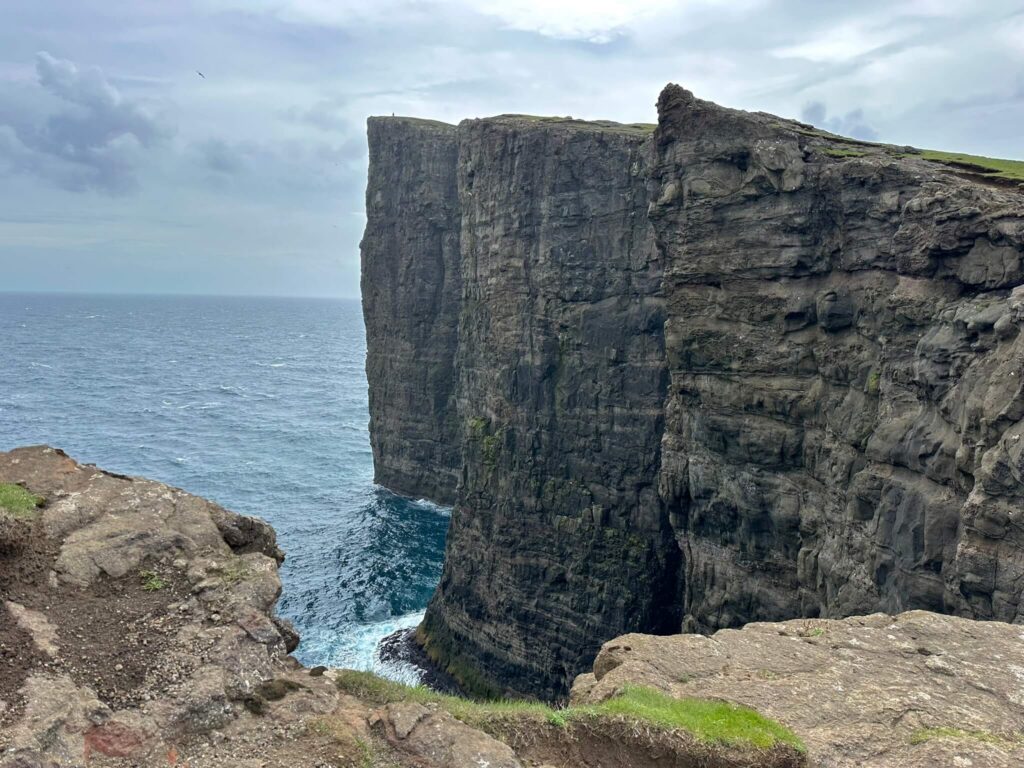
The Sørvágsvatn hike to Trælanípa is one of the best-known walks in the Faroe Islands. This is the place where it looks as if a lake is floating above the ocean. An optical illusion, but a very beautiful one.
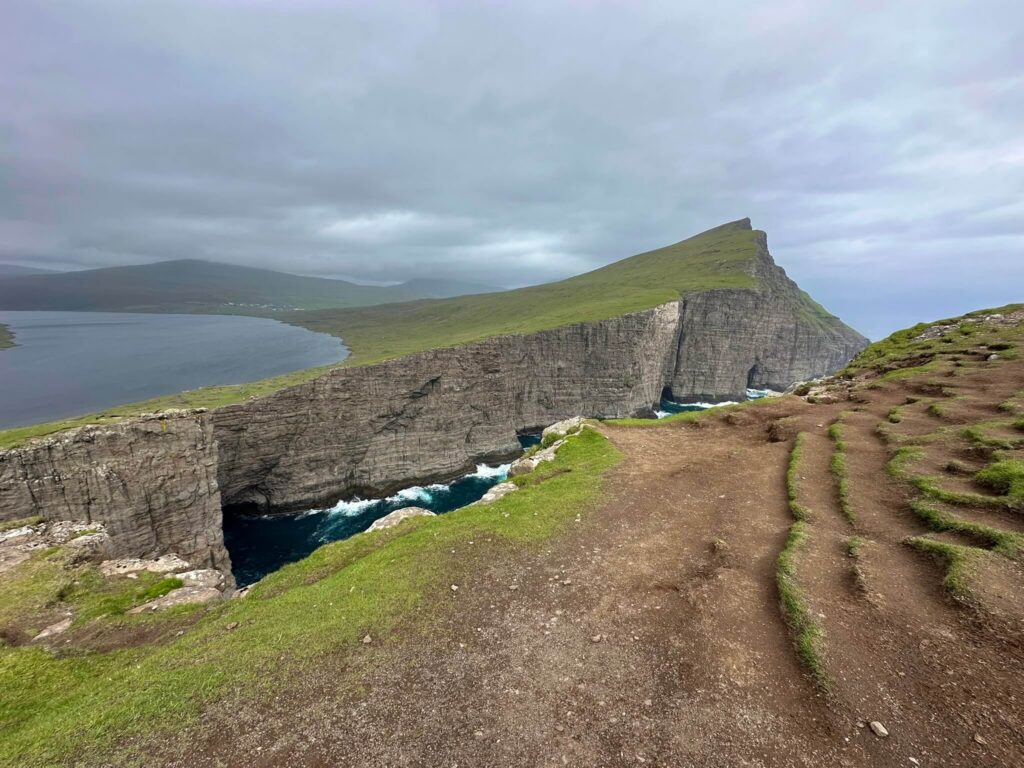
We combined this hike with the Drangarnir boat trip. That was a logical day on Vágar, because from Sørvágur you drive to the start of the walk in about fifteen minutes. The hike cost us 200 DKK per adult and came to around 8 kilometres, because at the split we did both directions.
With a baby in the carrier, it went fine, but you really cannot take a stroller here. Also keep the wind in mind. We walked here at the end of June and were simply wearing hats and gloves at the start.
Attractions on Streymoy
Streymoy is the largest island in the Faroe Islands. The capital Tórshavn is located here, but we especially loved the north of Streymoy. There you drive along narrow roads, quiet villages, black beaches and tall waterfalls.
Saksun
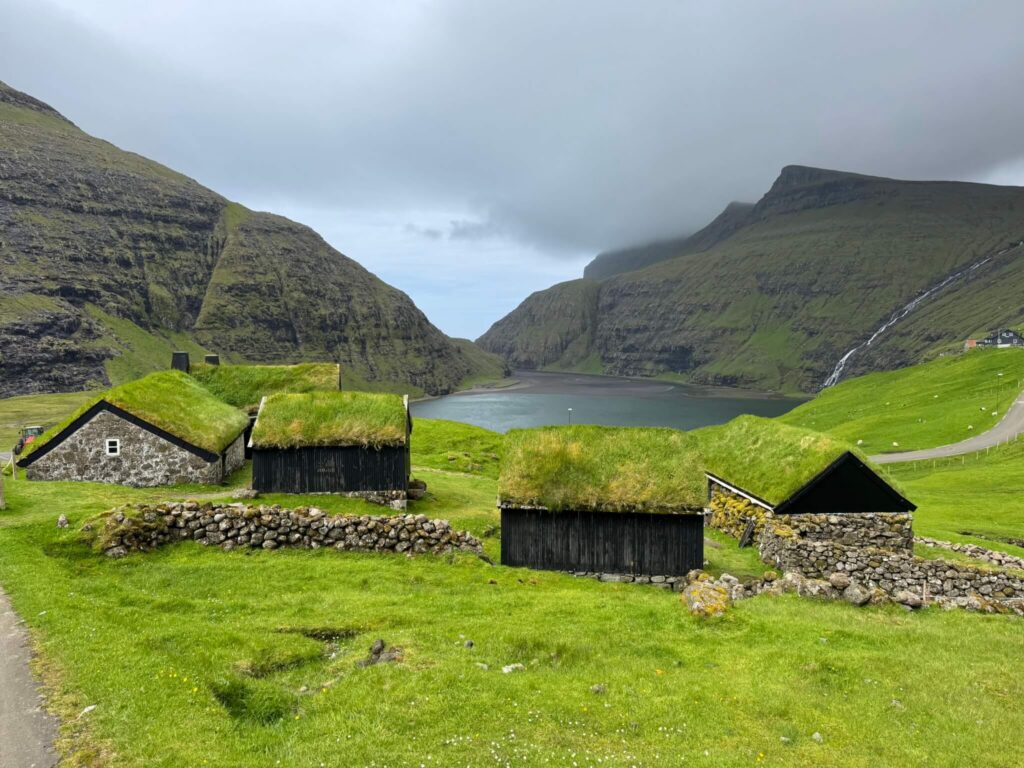
Saksun is one of the best-known villages on Streymoy. It lies in a green bowl between the mountains, with a lagoon, an old farm museum, turf-roofed houses and a waterfall. The road there is already beautiful, with waterfalls along the mountain walls and sheep that do not care much about your driving schedule.
We visited Dúvugarðar, the old farm in Saksun. We paid 150 DKK per person for it. Honestly: we thought that was quite steep for what you get. But the location of Saksun itself really is special. If you want to walk to the black beach, check the tide carefully.
Fossá Waterfall
Fossá Waterfall is the highest waterfall in the Faroe Islands. It lies along the road towards Tjørnuvík, which makes it very easy to include during a route through North Streymoy.
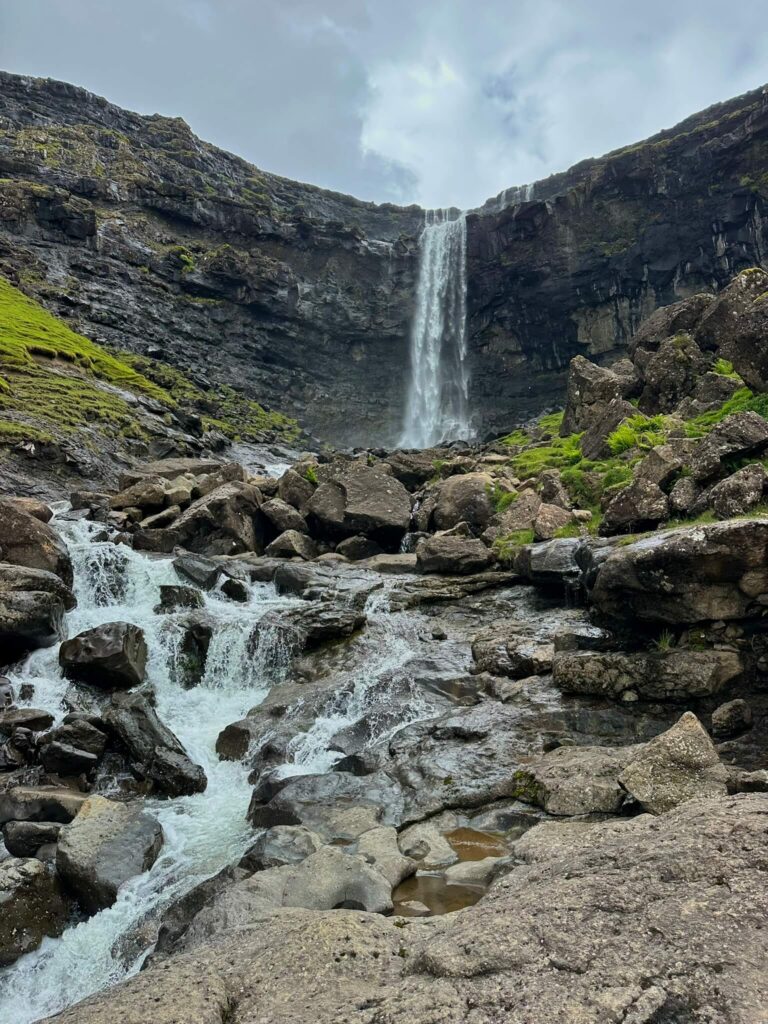
This is not a place where you need half a day. You park along the road, walk a short distance and are already at the waterfall. Count on 15 to 30 minutes. Especially after rain, Fossá can be powerful, and rain is usually not too difficult to find in the Faroe Islands.

Tjørnuvík
Tjørnuvík lies on a black bay in the north of Streymoy. The village itself is small, but its location is beautiful. From the beach, you look out towards Risin og Kellingin, the famous sea stacks.
We mainly found Tjørnuvík a lovely way to end the day. Getting some fresh air, looking at the waves and not having to do too much. The road there is narrow, so take your time and drive calmly. Especially when oncoming traffic appears.
Tórshavn
Tórshavn is the capital of the Faroe Islands and useful for a quiet afternoon. Do not expect a big city, but you will find more restaurants, shops and cafés here than on the rest of the islands. The old area of Tinganes, with its red wooden houses, is nice to walk through briefly.
For us, Tórshavn was mainly practical. Doing some shopping, getting something to eat and planning a calmer day. That is definitely not unnecessary in the Faroe Islands, especially when the weather or your baby is not cooperating for a while.
Attractions on Eysturoy
Eysturoy lies next to Streymoy and is easy to reach by car. You can drive via the bridge or through the Eysturoyartunnilin, the tunnel with the underwater roundabout. That alone already sounds like an attraction, but above ground we found the island even more beautiful.

Gjógv
Gjógv is a village in the north of Eysturoy, known for its natural gorge by the sea. Its location is beautiful: mountains, grassy slopes, sea and a small village that seems to fit perfectly into the landscape.
We thought Gjógv was one of the nicer villages for a calm wander. You can walk to the gorge, look up towards the slopes and, with a bit of luck, spot puffins. No guarantee of course, but we did see them in this area.

Hvíthamar
Hvíthamar is a short walk to a viewpoint above Funningsfjørður. Short does not automatically mean easy here, by the way. Because of wind, fog or wet grass, a short hike like this can still feel tougher than you expect beforehand.
In clear weather, you get a beautiful view over the fjord, the mountains and the winding roads. In fog, you mostly see a lot of white. That is also part of the Faroe Islands, but do check the weather before you walk up.
Funningur and the mountain pass
Sometimes the biggest attraction is not the village itself, but the road towards it. That is how we felt about Funningur and the mountain pass on Eysturoy. You drive through a rugged landscape with fjords, mountains and views that keep changing.
Do not just plan the final destination here, but take time for the route. Especially on Eysturoy, we often stopped spontaneously along the road. Not always at an official highlight, but simply because the view was too beautiful to keep driving.

Eiði and Risin og Kellingin
Near Eiði, you can also view the famous rocks Risin og Kellingin from the Eysturoy side. These are the same rocks you see from Tjørnuvík, but from a different perspective.
It is a nice short stop during your route across Eysturoy. Not spectacular as a standalone day activity, but beautiful as part of a driving route along Gjógv, Funningur and Hvíthamar.

Elduvík
Elduvík is a quiet detour to a small village by the sea. Do not expect a major attraction, but rather silence, views and that feeling of having reached the end of a road. If you have time on Eysturoy and the weather is good, this is a beautiful extra stop.
Attractions around Klaksvík and the northern islands
Klaksvík is a useful base for the north of the Faroe Islands. From here, you can easily drive to Klakkur, Viðoy and the surrounding islands that are connected by tunnels and roads. We found this part of the trip surprisingly beautiful, especially because it felt a little quieter than Vágar.
Klakkur hike
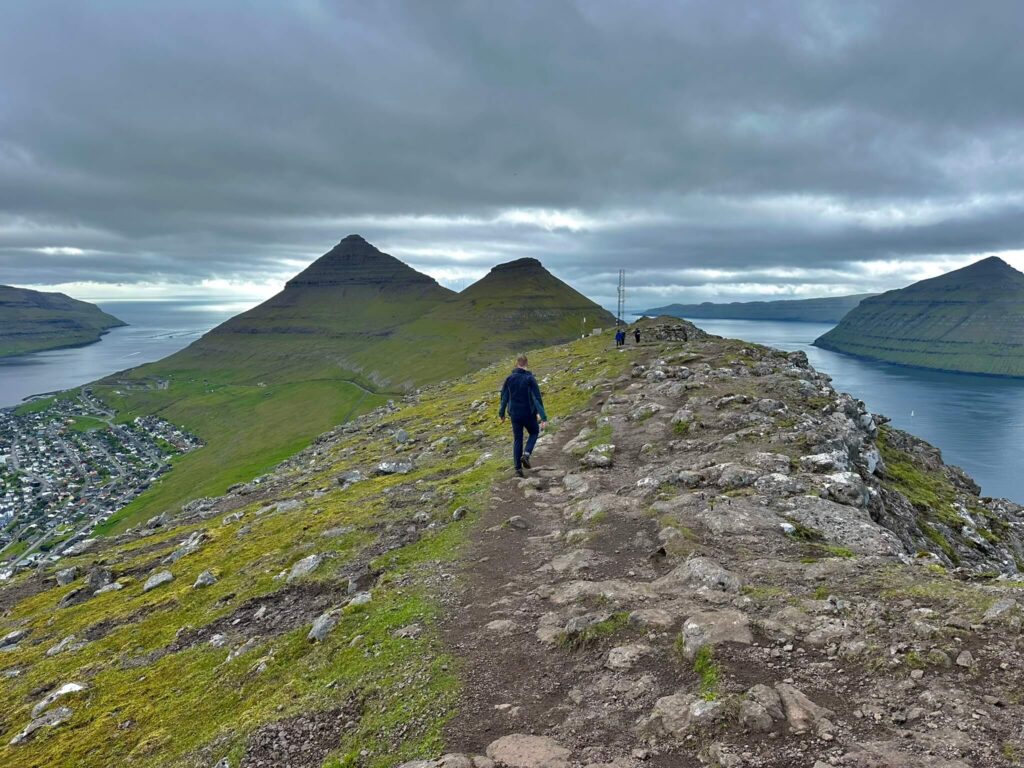
The Klakkur hike near Klaksvík was one of our favourite short walks in the Faroe Islands. Not too long, not extremely difficult, but with enough mud and steep little sections to make it really feel like a hike.
The best part is at the top. You look out over Klaksvík, Kunoy, Kalsoy and the fjords. If you start from the upper car park, you get a lot of view for relatively little walking time. Your shoes will probably get dirty, but that is just part of it here.
Klaksvík
Klaksvík itself is not the most atmospheric place in the Faroe Islands, but it is practical. You will find shops, accommodation, a harbour and a good location for the north. We would mainly use Klaksvík as a base, not necessarily as a place where you spend a whole day hanging around.
Viðoy and Viðareiði
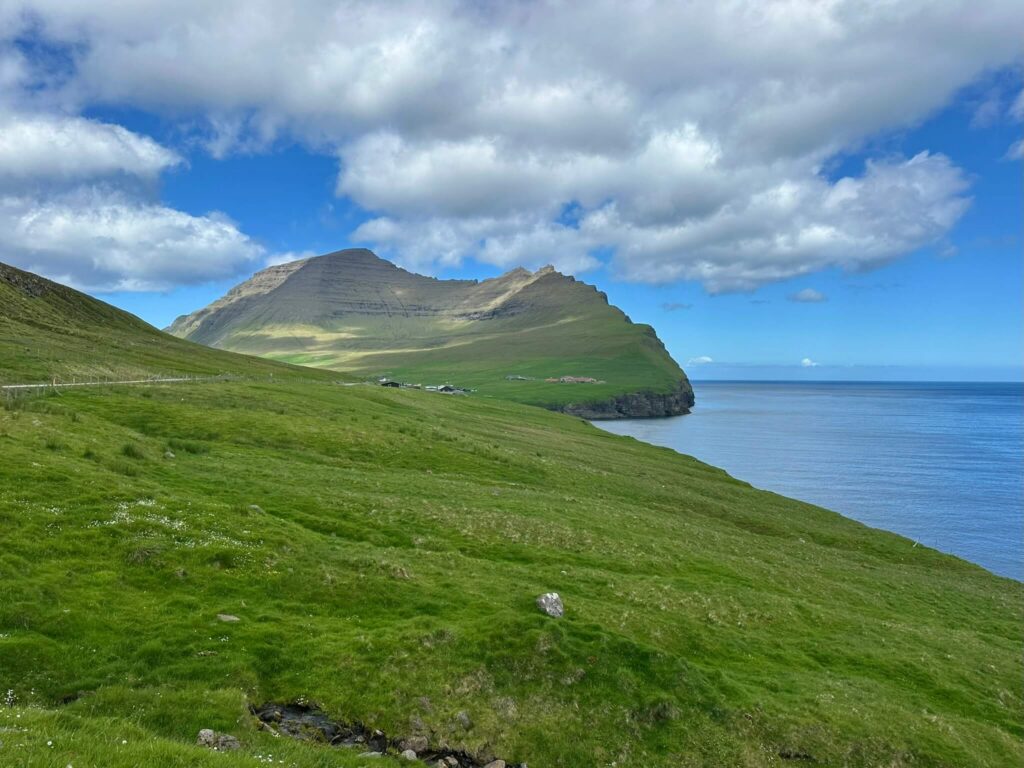
Viðoy is the northernmost island of the Faroe Islands that you can easily reach by car. From Klaksvík, you drive to Viðareiði, the northernmost village of the islands. Along the way, you get mountains, sea, quiet roads and sheep that cross at exactly the wrong moment.
Viðareiði really feels a bit like the end of the road. You do not come here for a long list of activities, but for views, silence and that northern atmosphere. We made a calm loop around Viðoy and thought it was a nice change after the better-known highlights.
Our favourite attractions in the Faroe Islands
If we had to choose, these were the most beautiful places of the trip for us:
- Sørvágsvatn and Trælanípa: famous, paid, but truly a special view.
- Drangarnir from the boat: rugged cliffs, rock arches and puffins from the water.
- Klakkur: short hike with a huge view above Klaksvík.
- Saksun: especially because of its location between mountains and lagoon.
- Gjógv: beautiful village, natural gorge and lovely atmosphere.
- Múlafossur: easy, free and a perfect first stop.
- Viðareiði on Viðoy: quiet, northern and beautiful as a final stop.
How do you combine these attractions?
If you want to combine these places logically, I would take at least 5 days. With 7 days, you have much more calm and can also respond to the weather. That is really important in the Faroe Islands. Sometimes a viewpoint is completely covered in fog, and an hour later everything opens up.
Our tip: divide your stay between Vágar, Streymoy or Tórshavn, and Klaksvík. That way, you do not have to drive back and forth as much. View accommodation on Vágar, in Tórshavn or in Klaksvík.
Do you want to see exactly how we would plan this in one week? Then read our complete 7-day Faroe Islands road trip itinerary.
Renting a car for the most beautiful places in the Faroe Islands
For almost all places in this blog, a rental car is useful. The distances are not huge, but the flexibility is worth gold in the Faroe Islands. You can stop at viewpoints, change your plans when the weather changes and combine several places in one day more easily.
Do keep in mind narrow roads, tunnels, sheep and tolls for some subsea tunnels. We found driving very doable, but mainly you need to drive calmly and not rush too much.
Tours and activities in the Faroe Islands
You can visit most attractions in the Faroe Islands at your own pace with a rental car. Still, there are a few places where a tour is useful or even necessary. Think of Drangarnir, for example, which you can visit by boat or via a guided hike.
We thought the Drangarnir boat trip was a great way to see the coast from the water, especially because we were travelling with a baby. You can view the Drangarnir boat trip from Sørvágur here.
Which attractions can you skip?
Skipping sounds a bit harsh, because almost everything in the Faroe Islands is beautiful. But you do not have to do everything to have a good trip. For example, we did not take ferries to Mykines or Kalsoy. Because our baby got sick, we wanted to stay flexible and avoid fixed ferries or extra logistics.
Looking back, we did not mind that at all. The main islands already offer plenty of variety: Vágar for the famous highlights, Streymoy for villages and waterfalls, Eysturoy for driving routes and views, and the north for Klakkur and Viðoy.
Do you have more than a week and good weather? Then you can of course add extra islands. But for a first trip, I would rather plan less and leave more space. The Faroe Islands are not a destination to rush through.
Practical tips for visiting attractions in the Faroe Islands
- Always bring rain gear. Even if it looks dry when you leave.
- Do not just stop in the middle of the road. There are enough passing places, so use them properly.
- Check whether you need to pay for hikes. Some walks cross private land.
- Do not blindly trust the weather forecast. It can differ hugely from place to place.
- Bring layers. Even in June, we sometimes wore hats and gloves.
- Travelling with a baby? Use a baby carrier. Strollers are not useful or simply impossible on many hikes.
- Do not plan too tightly. Fog, wind or rain can change your plans just like that.
So, what are the most beautiful attractions in the Faroe Islands?
For us, the most beautiful attractions in the Faroe Islands were mainly the places where you really feel the rugged landscape. Not necessarily big attractions with lots of facilities, but places where sea, wind, cliffs and green mountains come together.
Sørvágsvatn, Drangarnir, Klakkur, Saksun, Gjógv and Viðoy stayed with us the most. But honestly: it was often also the bits in between. The road to Saksun. The mountain pass on Eysturoy. A sheep standing in the middle of the road as if the island belonged to it. A short stop that suddenly turned out to be more beautiful than planned.
That is what makes the Faroe Islands so lovely. You do not always have to hike far or book complicated tours. With a rental car, good clothing and a bit of flexibility, you already get to incredibly beautiful places.

Easily book your trip to the Faroe Islands
Flights
Hotels & apartments
Car rental
