


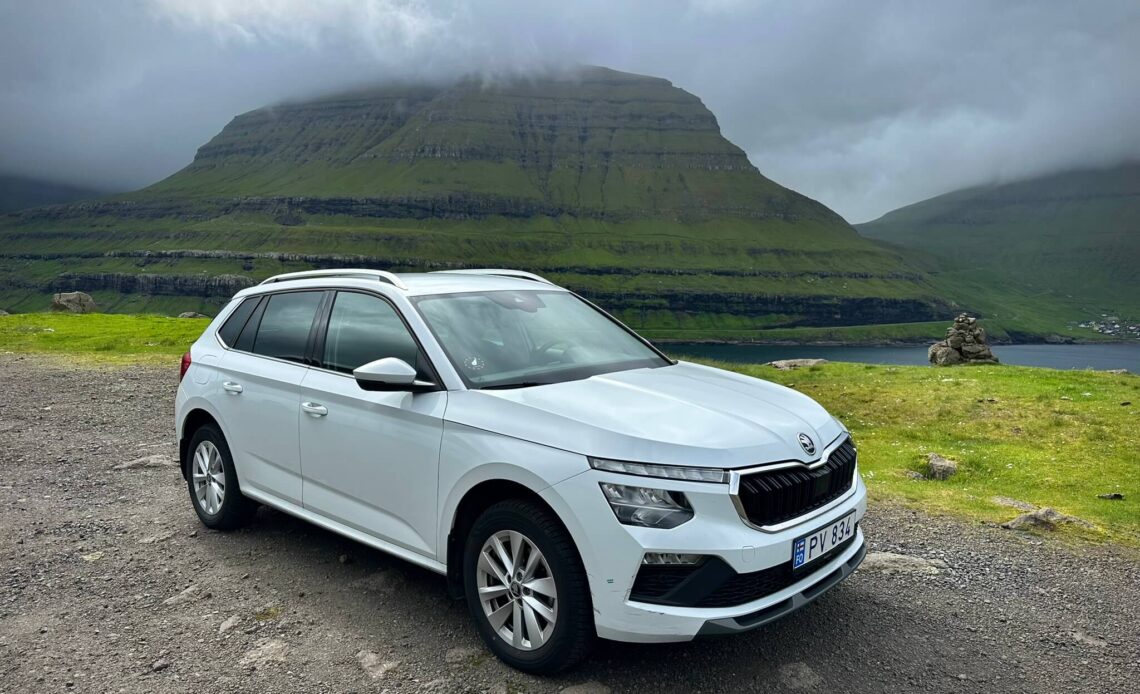
Renting a car in the Faroe Islands is, in our opinion, the best choice if you want to see a lot of the islands. The distances are not big, but you actually want to stop often along the way. For a viewpoint. For a waterfall. For a sheep standing in the middle of the road as if it owns the place. And sometimes simply because the light suddenly falls beautifully on the fjord.
We rented a car for our 7-day road trip around the Faroe Islands. We booked it through Discover Cars and it was honestly very easy to arrange. Pick up the car at the airport, put your bags in and go. The Faroe Islands airport is small, so you are never searching for long or walking endlessly with your suitcases.
In this blog, I share our experience with renting a car and driving in the Faroe Islands. From toll roads and tunnels to one-lane roads, strange speed signs, gusts of wind and why we were glad we did not have a fixed schedule with buses or ferries.
Contents
Do you need a rental car in the Faroe Islands?
Need is maybe a big word, because buses do run in the Faroe Islands. But if you want to see a lot in a short time, I would really rent a car. Especially if you are not only staying in Tórshavn and also want to drive to Vágar, Streymoy, Eysturoy, Klaksvík and Viðoy.
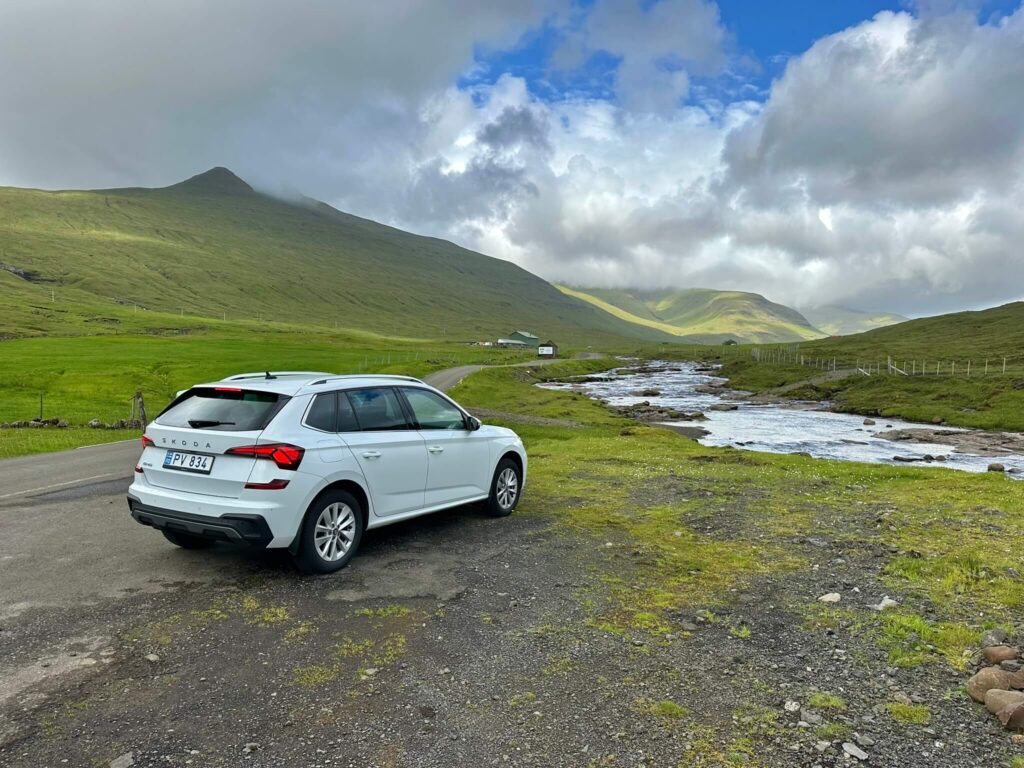
With a rental car, you can adjust your day much more easily. And in the Faroe Islands, that is definitely useful. The weather changes quickly. A viewpoint can be covered in fog at 10 o’clock and suddenly be beautifully clear at 12. With a car, you can move things around, take a detour or simply wait for a bit.
We travelled with our 8-month-old daughter. In that case, a rental car is especially nice. Naps in the car, extra clothes in the back, baby carrier within reach and no stress because you have to catch a bus. Especially when she got sick during the trip, we were happy that we could stay flexible.
Want to know how we planned our route by rental car? Then also read our 7-day Faroe Islands road trip itinerary.
Renting a car from the Faroe Islands airport
Picking up a rental car at the Faroe Islands airport is very simple. The airport is on Vágar and is small. So you do not walk for fifteen minutes through parking garages or past endless counters. Pick up your luggage, go to the rental desk and before you know it, you are outside at your car.
We booked our car in advance via Discover Cars. That worked perfectly fine. Especially in a destination like the Faroe Islands, I would book in advance, because the supply is not endless. Especially in summer, you do not want to find out on arrival that the affordable cars are already gone.
What are the roads like in the Faroe Islands?
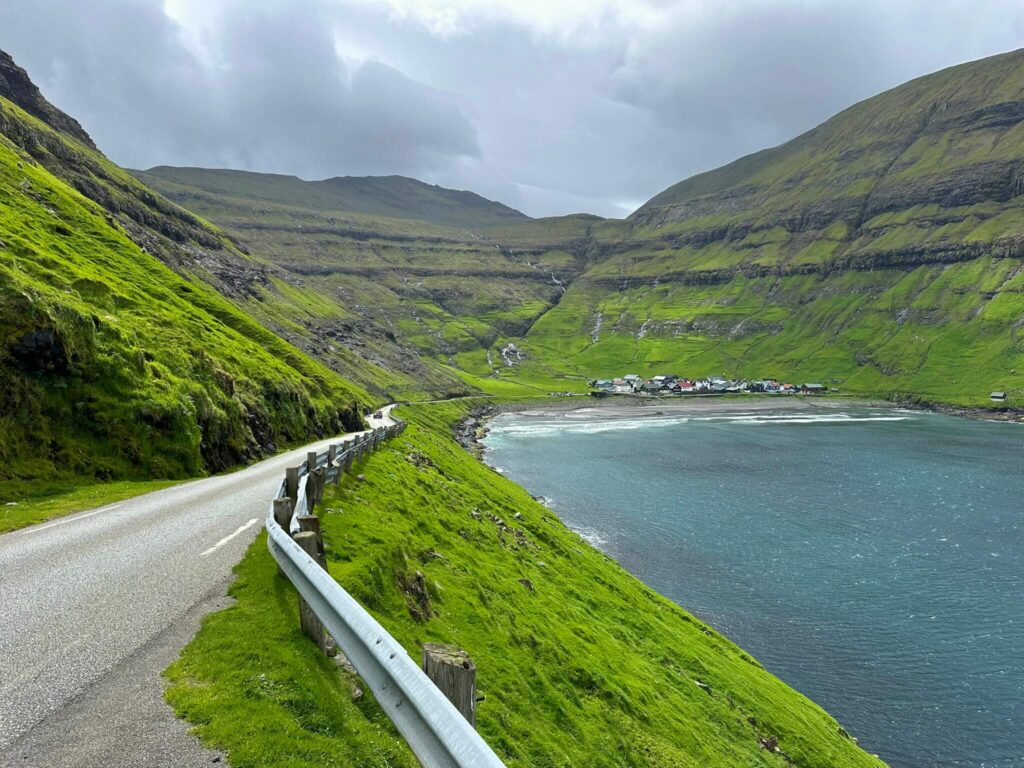
What immediately stood out to us: the roads are really good. Beforehand, we expected narrow, bumpy island roads, but that was much better than expected. The asphalt is usually very good, we barely came across roadworks and there are hardly any traffic lights. That makes driving in the Faroe Islands surprisingly relaxed.
Of course, you are not driving on wide highways everywhere. Many routes wind along fjords, through tunnels or over mountain passes. But the main roads are well maintained and clear. You mainly need to drive calmly and not assume that every short distance will automatically be quick.
The charm of driving in the Faroe Islands is precisely being on the road. Sometimes the road to a village is more beautiful than the village itself. We had that on Eysturoy, for example, where the routes along fjords, green slopes and mountain passes were already a big part of the experience.

One-lane roads in the Faroe Islands
In several places, you come across one-lane roads. That sounds more exciting than it is. We found it perfectly manageable, as long as you are not in a hurry. You drive calmly, look ahead and use the passing places when a car comes towards you.
Sometimes you need to move slightly onto the shoulder or wait until the other car can pass. That is just part of it. Most drivers are very relaxed about it. You notice that everyone is used to narrow roads and that things mainly go wrong when you drive in a rushed or uncertain way.
A few routes where you want to drive extra calmly are the roads towards Saksun, Tjørnuvík and some higher car parks at hike starting points. At Klakkur, we also drove part of the way on a narrower road and gravel towards the upper car park. That was fine, but you do need to keep thinking logically and not blindly follow your navigation.
Tunnels and toll roads in the Faroe Islands
The Faroe Islands have several tunnels, including a number of subsea tunnels. Some of these are toll roads. You do not have to stop at a toll booth. You simply drive through and the number plate registration does the rest.
With a rental car, the toll is usually charged afterwards through the rental company. For us, the amount was later charged to our credit card. In one week, we paid 630 DKK for toll roads. So this is definitely something to include in your budget.
Especially if you drive several times through the Vágatunnilin, Norðoyatunnilin or Eysturoyartunnilin, the amount adds up. We did not mind, because the tunnels make travelling around the Faroe Islands very easy. You are much less dependent on ferries and can reach many main islands by car in one week.
Please note: prices and conditions can change. So check when you pick up your rental car how your rental company charges tunnel costs. Then you immediately know whether you can expect another charge on your credit card afterwards.
The Eysturoyartunnilin: driving through the tunnel with the subsea roundabout
One of the best-known tunnels in the Faroe Islands is the Eysturoyartunnilin. This is the tunnel with the subsea roundabout and light art. Of course, you do not get out of the car there, but it is fun to experience. It feels a bit like driving through an attraction, but simply on your way to the next village.
This tunnel can be useful if you are driving from Streymoy towards Eysturoy, Klaksvík or the northern islands. If you want to save on tolls, you can sometimes also drive via the bridge. That takes a little longer, but it is free and often beautiful too. We did both, depending on the plan for the day.
Speed in the Faroe Islands: pay attention near villages
In general, driving in the Faroe Islands is easy to understand. Outside built-up areas, you are usually allowed to drive 80 km/h, and in villages and towns 50 km/h, unless otherwise indicated. But there was one thing we found confusing.
Just before some built-up areas, there is a sign saying 60. A few metres later, you then see the place name sign. Pay attention: from that moment, you are inside the built-up area and the speed limit is 50 km/h, not 60 anymore. That feels strange, because just before that there was still a 60 sign. We found that quite confusing at first.
Our tip: if you see a place name sign, simply assume 50 km/h, unless something else is clearly indicated after that. That way, you drive safely and avoid trouble with fines.
Traffic lights? Almost none
Another thing that makes driving in the Faroe Islands pleasant: there are hardly any traffic lights. You drive mostly through open landscapes, along fjords and through small villages. That makes driving feel calm, even if you visit several places in one day.
That does not mean you can drive fast everywhere. Because of bends, wind, sheep and narrow sections, your pace is often automatically lower. But it is not a destination where you are constantly stuck in traffic. We loved that.
Sheep on and along the road
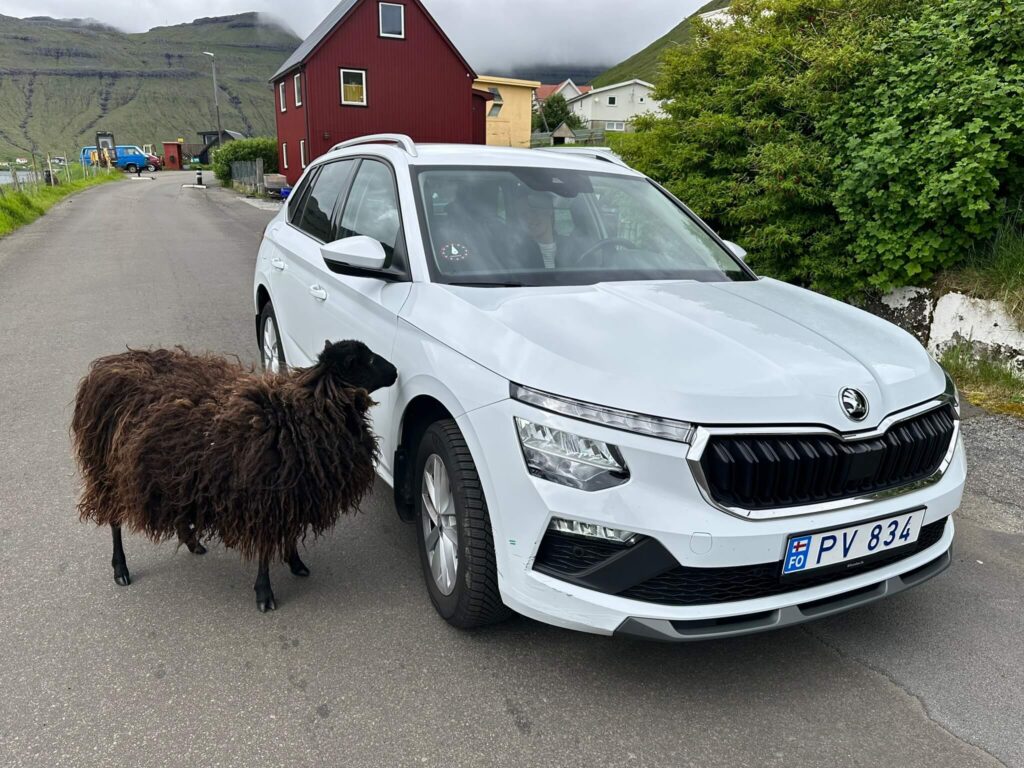
You cannot write a blog about driving in the Faroe Islands without mentioning sheep. They are everywhere. Along the road, on slopes, in car parks and sometimes simply in the middle of the lane. Most of the time they stay calm, but do not assume they will react logically.
That is why we preferred to drive a little slower on some stretches. Especially around bends and hills, you do not want to be suddenly surprised by a sheep deciding to cross the road. And honestly: it also makes driving more fun. It is simply part of the Faroe Islands.

Watch out for strong wind when opening your car door
The wind in the Faroe Islands can be strong. Not only during hikes, but also simply when you park somewhere. So pay close attention when opening your car door. A strong gust of wind can easily pull the door out of your hand.
That may sound like a small thing, but on an island where it is often windy, it is really something to watch out for. Hold the door firmly, especially in open car parks near cliffs, fjords or viewpoints. And do not get out thoughtlessly if you are sitting on the windward side.

Parking in the Faroe Islands
We usually found parking easy. At many villages, viewpoints and hikes, we could park our car without any problems. Sometimes it is a small gravel area, sometimes an official car park and sometimes simply a logical spot along the road.
Do make sure you do not use a passing place on a narrow road as a parking spot. Those places are meant to allow oncoming cars to pass. Especially on one-lane roads, you do not want to leave your car there.
At popular places such as Sørvágsvatn, Múlafossur or Saksun, it can be busier, but we did not really have parking problems anywhere. Still, the same applies here: if you do not feel like searching, try not to arrive at the busiest moment of the day.
Driving with a baby in the Faroe Islands
For us, a rental car with a baby was absolutely ideal. We could follow our daughter’s rhythm, stop easily for a bottle or nappy and leave hiking gear in the car. When she got sick, we could adjust our plans without depending on ferries or buses.
The distances are short enough to keep things manageable. A one-hour drive in the Faroe Islands also often feels shorter, because you see so much along the way. Although of course you should not forget that babies sometimes think differently about that.
Our tip: keep rain gear, an extra layer, baby carrier and food/drinks on top in the car. On our first day, our rain gear was still somewhere at the bottom of the suitcase. Not very handy when you are standing in the rain at Múlafossur straight after arrival.
What kind of car do you need in the Faroe Islands?
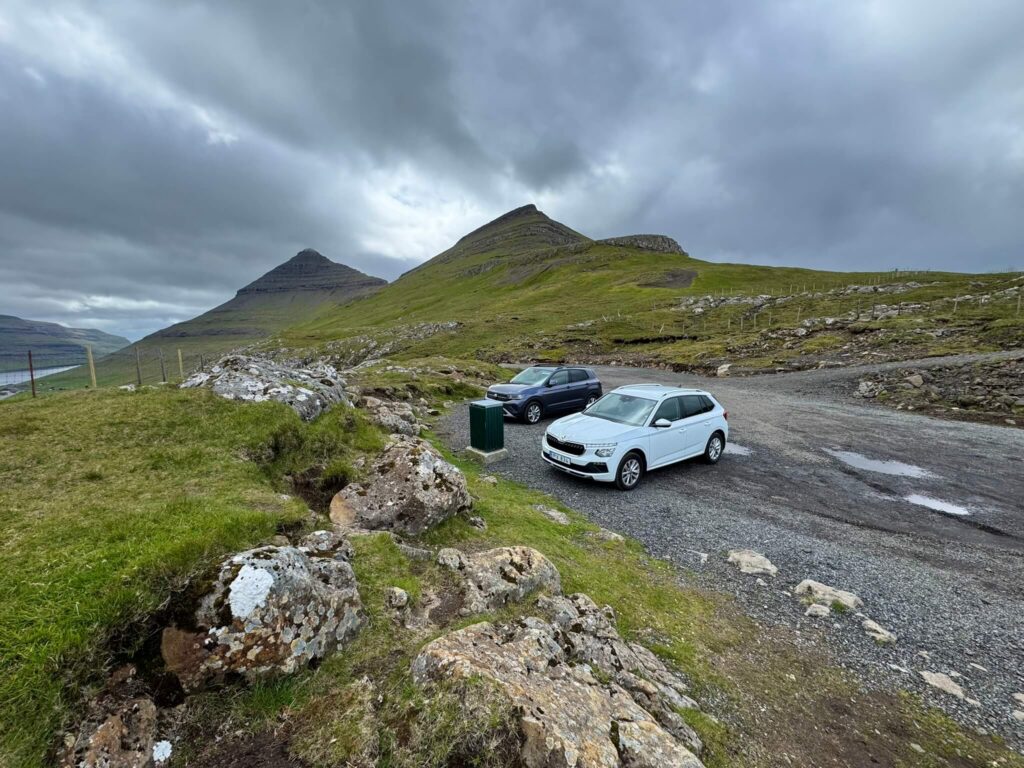
You do not need a huge 4×4 for a normal road trip through the Faroe Islands. The main roads are good and you can reach most places perfectly well with a regular rental car. However, a car with enough power and good grip is nice if you drive over mountain passes or take steeper roads to car parks.
Mainly choose a car that fits your travel group and luggage. We travelled with a baby, so you quickly have more stuff with you than you want to admit beforehand. Think suitcases, baby seat, baby carrier, nappies, extra clothes and hiking gear.
If you travel in winter, I would pay extra attention to tyres, insurance and conditions. The Faroe Islands can be wet, windy and slippery. In summer, we found a normal rental car more than enough.
Insurance and credit card
As with almost every rental car, you need a credit card for the deposit. The toll roads were also charged to our credit card afterwards. So keep that in mind if you see another charge after your trip.
When booking, check the insurance, excess and what is or is not included. In the Faroe Islands, you drive a lot on narrow roads, past sheep and sometimes over gravel towards car parks. Then it is nice to know exactly where you stand.
Is driving in the Faroe Islands scary?
We mainly found driving in the Faroe Islands relaxed. The roads are good, traffic is calm and most routes are clear. The most exciting parts are not crowds or chaos, but narrow sections, wind, sheep and sometimes fog.
If you drive calmly, look ahead and are not in a rush, it is really manageable. Precisely because traffic is so calm, we actually found driving here nicer than in many other countries. You do not constantly have to merge, brake for traffic lights or drive through busy cities.
You do need to adjust your speed to the conditions. In strong wind, fog or rain, you simply drive a little slower. In the Faroe Islands, that is not weakness, but common sense.
Practical tips for driving in the Faroe Islands
- Book your rental car in advance. Especially in summer, availability is limited.
- Pick up your car at the airport. It is small, clear and easy.
- Check how tolls are charged. For us, 630 DKK was later charged to the credit card.
- Pay attention to place name signs. After the sign, the speed limit is usually 50 km/h, even if there was a 60 sign just before.
- Drive calmly on one-lane roads. Use passing places and do not rush.
- Do not park in passing places. They are needed for oncoming traffic.
- Hold your door firmly in strong wind. A gust can pull it open just like that.
- Watch out for sheep. Especially around bends, hills and narrow roads.
- Keep rain gear on top. You will probably need it sooner than you think.
- See the route as part of your trip. In the Faroe Islands, the roads are often just as beautiful as the stops.
Renting a car in the Faroe Islands: yes or no?
Yes, in our opinion, absolutely. A rental car makes your trip through the Faroe Islands much easier, more flexible and more fun. You can stop where you want, adjust your plans to the weather and visit places that are harder to reach by public transport.
We found the roads surprisingly good, the traffic light and the driving easy to understand. The one-lane roads require some patience, the toll roads cost extra money and the wind can almost pull the car door out of your hands, but these are all things you can take into account.
For our one-week trip, the rental car was essential. Especially with a baby, changeable weather and a route across several islands. Do you also want to make a road trip along Vágar, Streymoy, Eysturoy, Klaksvík and Viðoy? Then I would simply arrange your rental car in advance and enjoy the drive.
Want to plan a logical route right away? Then view our 7-day Faroe Islands road trip itinerary.

Easily book your trip to the Faroe Islands
Flights
Hotels & apartments
Car rental
