


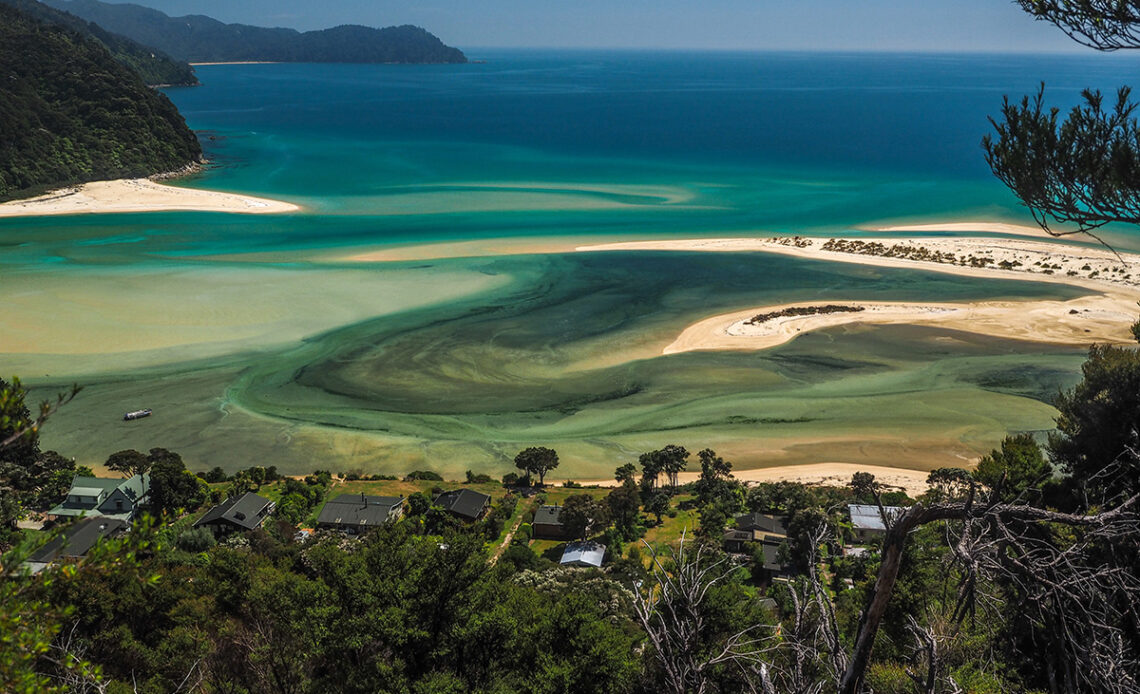
Abel Tasman National Park is an earthly paradise you simply can’t miss during your visit to New Zealand. Just imagine: you wake up in the heart of this stunning park, surrounded by golden beaches, lush forests, crystal-clear streams, and waterfalls. This park might just be the most diverse in all of New Zealand, with its idyllic little bays and rich wildlife, including seals, little penguins, and dolphins.
Contents
First, the history of Abel Tasman National Park
The park is named after the first European explorer to discover the area: the Dutch explorer Abel Tasman. However, he wasn’t the first person to live here. The Māori, the Indigenous people of New Zealand, had lived here for centuries before Tasman arrived in 1642. After a conflict with the Māori, Tasman and his crew were chased away. It took more than a century before James Cook rediscovered the area, followed by Jules Dumont d’Urville, who managed to negotiate with the Māori. Sadly, the arrival of Europeans led to large-scale deforestation—until the New Zealand government decided in 1942 to purchase a large part of the area to protect it. And that’s how Abel Tasman National Park came to exist as we know it today.
Things to do in Abel Tasman National Park
There’s so much to do in Abel Tasman National Park that you won’t be bored for a second. You can kayak, take boat tours, lounge on the beach, camp under the stars, and hike the multi-day Great Coast Walk. Most tourists arrive in the park by boat, so you won’t find busy highways here!

1. Hiking in Abel Tasman National Park
Walk along incredible sandy beaches, jaw-dropping viewpoints, and through native wilderness. Abel Tasman is famous for the Abel Tasman Coast Track. But heads up: it’s over 60 km long.
The Abel Tasman Coast Track
The official Abel Tasman Coast Track route runs from the village of Marahau to Whariwharangi Bay. From here, you can choose to walk on to Wainui or head back toward Totoranui. The route follows the coast or winds through forest, and you’ll regularly cross hills or walk sections on the beach. The track is over 60 km long. So you can also choose to walk just part of it. Want to do it over multiple days? There are several places to stay along the way.
Keep in mind that some sections of the track can’t be walked all day long because of the tides. Before you go, check the tide timetable on the Department of Conservation website.
Do a shorter hike
Want to do an awesome hike in Abel Tasman, but not 60 km right away (which I totally get)? Then take a look at this AllTrails map. You can pick a hike depending on where you are in the park. The park covers more than 200 square kilometers.
Tip: use the water taxi. You can read more about it in my blog!
2. Canyoning in Abel Tasman National Park
In the heart of Abel Tasman National Park lies an untouched paradise—seen by few, but loved by many. An adventure with Abel Tasman Canyons challenges you to step out of your comfort zone as you abseil down stunning granite gorges, zip through pristine rainforest, and slide into some of the чистest waters and natural rock pools you can find. The friendly guides let you enjoy a few hours of pure fun in this extraordinary place, and you’ll definitely leave with a big smile on your face—and a whole new appreciation for the beautiful natural landscapes that surround us here in Nelson Tasman.
3. Visit the iconic Split Apple Rock
Between Kaiteriteri and Marahau—the gateways to Abel Tasman National Park—lies a hidden landmark that can easily rival the natural wonders of the world. Exactly how Split Apple Rock was formed is unknown and regularly debated. Scientists believe the rock split due to a natural process called ice wedging, where water seeped into cracks in the rock and froze, expanding until the rock split. On the other hand, Māori legend says the rock was split in two when the God of the Ocean fought the God of the Land over who could claim it—since it lay both in the ocean and on solid ground.

Other iconic sights in Abel Tasman National Park include the Tonga Arches, the rock formations at Anapai Bay, and Elephant Rock at Anchorage—all of which you can see during a walk on the Coast Track, a scenic cruise, or a kayak trip.

4. Kayaking in crystal-clear bays
All year round, you’ll see people in kayaks on the crystal-clear waters of Tasman Bay, exploring hidden coves and arches tucked away along the sprawling coastline. Many of these spots can’t be seen from land, and there’s an endless list of discoveries to make. Take it easy with a self-hire kayak, stop along the way for a picnic on a golden sand beach, or join one of the guided trips to learn more about the unique history of this extraordinary coastal paradise.
You can also choose to explore the coast in a traditional waka. A waka is a traditional Māori canoe. It’s a long, narrow vessel that was originally used by the Māori, the Indigenous people of New Zealand, to travel across the water.
5. Step aboard a (sailing) boat
Want to visit Abel Tasman but not stay overnight? A luxury cruise is a great way to explore this stunning park.
Explore remote hideaways and gorgeous golden beaches in Abel Tasman National Park, spot playful seal pups rolling through the water in the Tonga Island Marine Reserve, and hear the stories behind the park’s iconic sights—while you relax on board a comfortable sailing catamaran or scenic cruise.
6. Meet the wildlife of Abel Tasman National Park
Whether you join a kayak tour or a boat tour, you can spot all kinds of wildlife in the park. The hotspot is the island of Tonga (Google Maps). The best snorkeling is between the rocks from Tonga Quarry to Foul Point, while diving is most rewarding around the reef systems near Tonga Island.
Here you can see various crabs and lobsters swimming and scuttling through the caves and crevices around you. Little blue penguins, birds such as cormorants and gannets, and dolphins are also regular residents of this area. The wildlife sanctuaries where playful seal pups hang out on Tonga and the Pinnacle Islands are best seen from the water on boats or kayaks.
Please note: it’s important to remember that all animals and plants are fully protected and must not be touched, disturbed, or removed. Keep at least 20 meters away.
7. Stay overnight in the national park
Believe us when we say you don’t truly know the meaning of the words “peace”, “serenity”, and “calm” until you’ve spent a night in the extraordinary Abel Tasman National Park—where the sound of the waves lulls you to sleep and birdsong wakes you as a new day begins.
Pitch your tent at one of the designated campgrounds along the track, or hire a boat where you can “rise and shine” as the sun comes up over the horizon and casts its rays onto the sparkling water around you. Or, if you need a bit of luxury, enjoy modern comforts deep inside the national park with an overnight stay at one of the beach lodges, where you’ll be treated to delicious homemade meals and true Kiwi hospitality.
We went for luxury and stayed at Awarao Lodge. An absolute aanrader! You can’t get here by car, so make sure you book your boat trip in advance.
8. Take a flight over Abel Tasman National Park
Admire the scenic beauty of Abel Tasman National Park from a different perspective with a panoramic flight. Be amazed by the stunning views of the sprawling coastline, golden sand beaches, lush native forests, and crystal-clear waters of the many inlets and lagoons as you experience it all from above.
Honestly: this is one of the most expensive activities in Abel Tasman.
Practical tips for your visit to Abel Tasman National Park
- You can’t reach Abel Tasman by car. You’ll need to take a water taxi, hike in, or take a flight if you want to stay overnight in the park.
- The only place in the park where you’ll find a restaurant is at Awaroa Bay. So it’s recommended to bring enough food and drinks with you.
- Don’t forget to bring mosquito repellent, because they can be pretty annoying in this area.
- The best way to get around is with the Abel Tasman water taxi.
Abel Tasman National Park is a unique experience you can’t miss during your visit to New Zealand. Whether you’re into adventurous activities or just want to soak up breathtaking nature, this park has it all. So what are you waiting for? Plan your visit to this stunning park and make unforgettable memories!

New Zealand in Google Maps
We make your road trip easy by sharing 200+ points of interest & 300+ campgrounds in New Zealand with you via Google Maps in just a few clicks.
€ 2.95

