


When you think back to the Preikestolen, you’ll feel the thrill and joy all over again. This hike in Norway is more than just a walk through nature. It’s a beautiful hike that will undoubtedly stay with you for a long time. The view from the rocks is breathtaking (provided you have good weather, okay)! But I’ll also warn you: you won’t be the first tourist to do the Preikestolen hike. On average, more than 350,000 visitors per year hike to the iconic Pulpit Rock. That’s why I’m happy to share some tips for an awesome hike!
Contents
What is the famous Preikestolen?
Preikestolen, whose English name is ‘Pulpit Rock’, is a top destination in Norway. This impressive rock sits 604 meters above the Lysefjord and offers a beautiful view. The flat top of Preikestolen draws most of the attention. It ‘sticks out’ a little, and you can photograph it from above. Many hikers don’t know this, but Pulpit Rock is not the endpoint of the hike. For the perfect photo, you can continue a little farther.
The Preikestolen hike is 8 km in total (out and back) with an elevation gain of about 400 meters. At the top you’ll be standing at no less than 1,982 meters above sea level! Allow around 3 to 4 hours for the Preikestolen hike. Of course, this depends on how long you spend enjoying the view at the top!
The history of Preikestolen goes back thousands of years. It has long been a popular place, known from paintings and photographs. Archaeological finds point to prehistoric activity.

The route to the top
The route to Preikestolen is an unforgettable experience. You’ll find stunning views over fjords and nature. The path is well marked, which makes it easy to keep going. There really isn’t a point where you’ll doubt the route, which can sometimes be the case on other hikes in Norway. The trail is very well marked with red T-shaped markers.
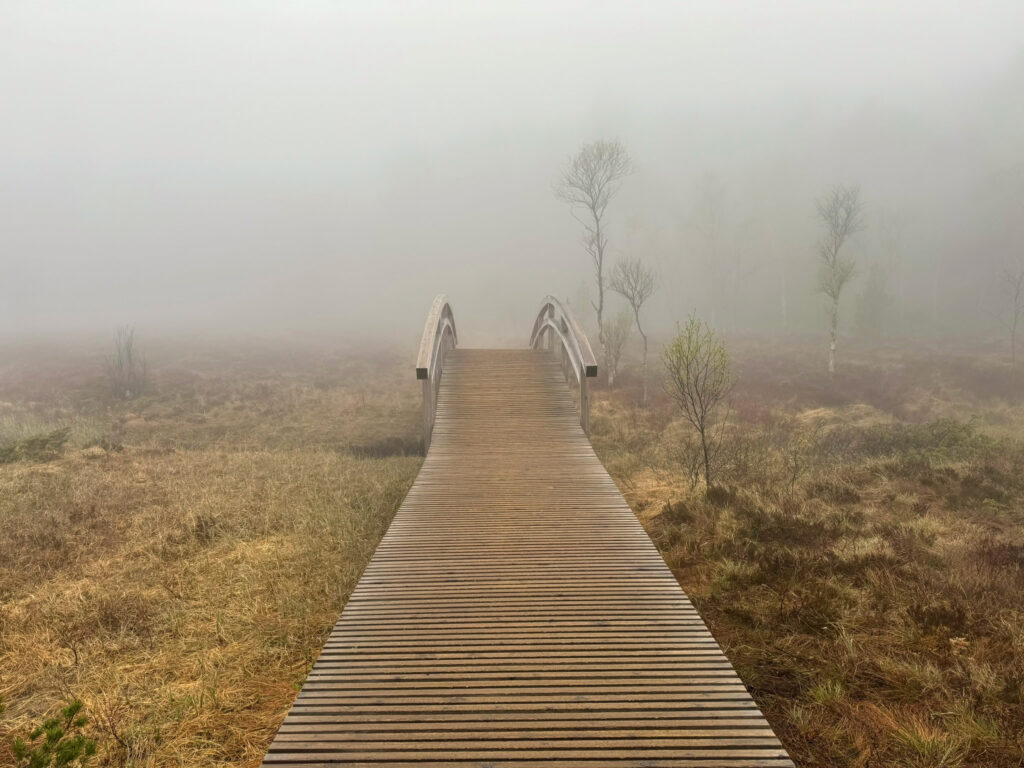

As mentioned earlier, my father and I took an hour and a half to reach the top. Some sections are flat and run over wooden boardwalks, but most of the route (on the way up) climbs over an uneven stone surface. The last few meters are relatively flat rocks, a plateau at the top of the fjord. From here you’ll notice the surroundings change. And an added bonus: the toughest part is then behind you.
Most of the route lies in a wooded area with plenty of shade. In the final part, due to the altitude, there is little vegetation and therefore little shade.

Arriving at Pulpit Rock
Once at the top of Preikestolen, hopefully you’ll have a beautiful view over the Lysefjord, and the rock itself is also an interesting natural formation. I was there on a fairly misty day in May, but I was still lucky with a good view. Unfortunately, Norwegian weather is known for its changeability, so a favorable forecast doesn’t necessarily guarantee a good view at the top, and it can often be gray and foggy. However, the fog can clear quite quickly. So it can be worthwhile to stay at the top for a while.

Don’t forget to complete the last part of the hike as well. Pulpit Rock itself is not the finish. Just before the famous rock there is a path that leads you a little farther up. From here you can see Pulpit Rock from above.
The best time for the Preikestolen hike
The Preikestolen hike is very popular, especially from May to September. During this time, conditions are best. The weather in Norway is unpredictable, so check the local forecasts carefully. But above all, the crowds determine whether you’ll really enjoy it, aside from your fitness to make it to the top perhaps. 🙂
The crowds determine the fun of your hike
I did it at the beginning of May. The trails were already easy to walk. Only at the end did I see a stray snowflake. On the way back I already found it quite busy. My father and I started at 8:00 a.m. and were at the top at 9:30 a.m. We even managed to take photos without other tourists in the frame. Secretly, that’s what you want at such popular destinations as Preikestolen. And again, we were here in early May. In summer it’s much busier!
The day before, we spoke to a local we met at the Preikestolen Base Camp. She actually advised us to start before 6:00 a.m. to beat the crowds. Okay, we found that a bit too enthusiastic. But if you’re an early bird, you’ll definitely benefit!
Not an early bird, but good weather? Then consider starting later in the day. Most people start between 10:00 a.m. and 12:00 p.m. You can also easily start at 2:00 p.m., which means you’ll mostly encounter returning hikers.
On the official Preikestolen website you’ll find the map below. It gives a good overview of the crowds and the latest recommended starting times.
Pay attention to the deadlines for starting the trail. In July, it’s not recommended to start after 5:30 p.m., and in August after 4:30 p.m. It is forbidden to use drones at Preikestolen, so don’t even bother carrying that extra weight in your backpack ;-).

The weather and conditions
Weather conditions at Preikestolen can change quickly. On misty mornings, the view is sometimes magical or just worthless. Take the time to assess the conditions carefully before you start. Here is a table with typical weather by season:
| Season | Average temperature (°C) | Precipitation (mm) | Best time for Preikestolen (yes/no) |
|---|---|---|---|
| Spring | 5 – 15 | 50 | Yes |
| Summer | 10 – 20 | 70 | Yes |
| Autumn | 3 – 15 | 90 | Yes |
| Winter | -5 – 5 | 100 | No |
Preparation for the hike
Good preparation is essential for an enjoyable hike to Preikestolen. Think carefully about what you need to bring. That way you’ll have everything you need. Here are some tips for the gear you’ll want for a comfortable hike.
What you should bring
Make a checklist of what to bring for Preikestolen. Here are some items I never forget:
- Plenty of water to stay hydrated
- Snacks, such as energy bars or fruit
- A first aid kit for emergencies
- Extra clothing for unpredictable weather conditions
- Sunscreen and a hat for sun protection
With this preparation and gear, you’ll be ready for your Preikestolen adventure. Good preparation ensures a successful and enjoyable hike!

Preikestolen hike: Tough or not?
The Preikestolen hike is an adventure that captivates many people. It’s important to keep your expectations realistic. The hike is about 8 kilometers long, with a 400-meter ascent. This can be tough, especially in the initial phase where the trail climbs steeply. A major advantage: the return is much easier. So it might be that the ascent feels tough if you’re not very well trained.
Please wear proper hiking boots!
For someone like me who regularly goes for a nice hike, it’s always a bit of a shock to see: someone starting a hike in white sneakers. If you care about your ankles, wear proper hiking boots with ankle support. Don’t expect a constructed path, gravel path, or boardwalks (okay, there is a small section of gravel path and boardwalks), but expect mainly rocks that have been laid together to form the route. You can clearly see this in the photos in this blog. So please wear proper hiking boots. Otherwise, the Priekestolen hike will indeed be a tough one.
Gear for a comfortable hike
The right gear is important for a comfortable hike. I’ve already said enough about good hiking boots on the rocky paths. A sturdy backpack helps you carry all your things. Here is an overview of what you need:
| Gear | Features |
|---|---|
| Hiking boots | Waterproof, good grip, sturdy sole |
| Backpack | Pack it with enough water, food & snacks |
| Clothing | Breathable, quick-drying materials; layering is useful. Rain gear if needed |
| First aid kit | Basics like band-aids, bandages, and painkillers |
Unfortunately, in the spring of 2024, there was another incident where someone fell and died at Preikestolen. Hikers are therefore always advised to carry a compass, whistle, and emergency blanket in their pack.
Preikestolen parking and transportation
Plan your hike to Preikestolen well by finding a good parking spot. There are about 400 spaces at P1, close to the start of the hike. At P2 you’ll find 600 spaces. Do note that parking is paid everywhere. Expect to pay over €20 if you’re doing the hike (depending on the current exchange rate).
Arriving early is smart, especially in high season. That way you’ll ensure there’s enough space for your car. The later you arrive, the farther away you’ll generally have to park.
Want to know everything about parking? This website offers a comprehensive explanation (in English).
Alternative transportation options
Don’t want to use a car? Then there are other options. Bus connections are the standard from Stavanger. Many day trips depart from there. Most bus trips leave around 10:00 a.m. and pick you up around 4:00 p.m. That gives you about 5 hours to complete the hike, which is perfectly feasible. There are food and beverage options at Preikestolen Base Camp, but don’t expect Dutch-style hospitality. It’s a quick bite and a drink.
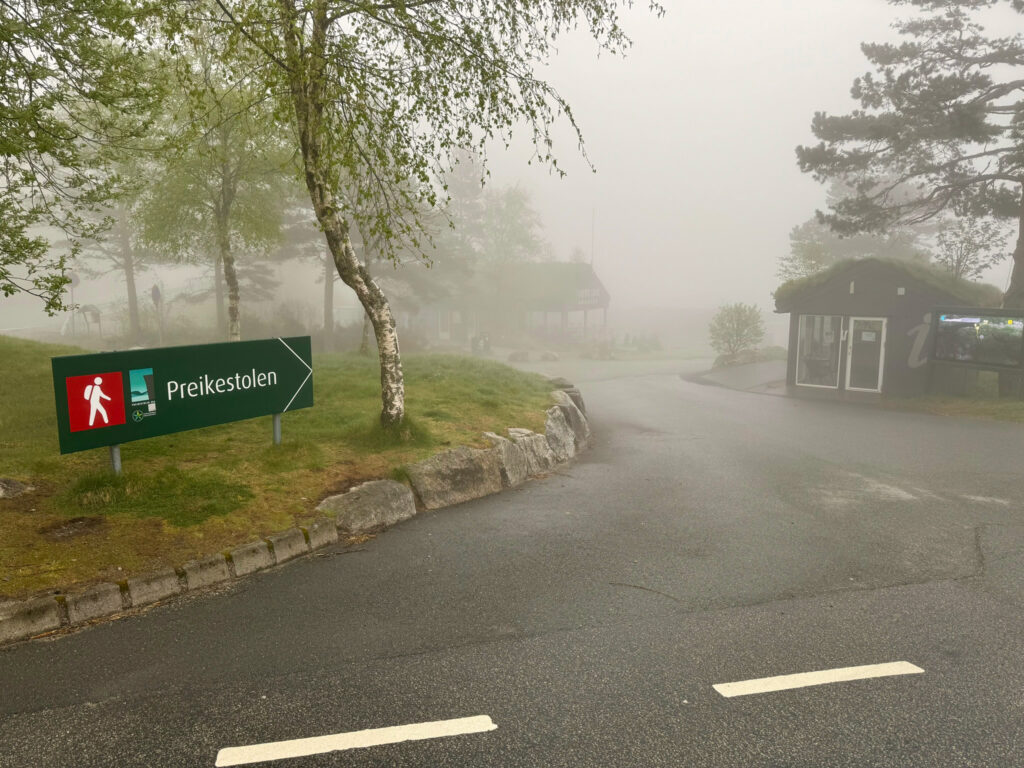
Preikestolen Base Camp or other accommodation
My stay at the Preikestolen Base Camp wasn’t very exciting, but it was fine. Above all, it’s a top spot for anyone wanting to visit Preikestolen. You’ll have easy access to the hike and can enjoy a comfortable stay after the day.
A smart tip: if you’re staying at the Preikestolen Base Camp and plan to do the hike the next morning, you can arrive at P1 late in the day, calmly find a spot, and then leave the next day with a free exit ticket from the hotel. That way you’ll be close by and park for free. Of course, this has to fit your schedule.
Camping in the area
There are many campsites close to Preikestolen. Preikestolen Camping is a top spot for nature lovers. You can enjoy the outdoors and the beautiful views. The campsites have all the facilities you need and even offer a shuttle service for camping guests.
Prefer to stay in Stavanger instead?
If you prefer to stay in a hotel, there are plenty of options in Stavanger: the Radisson Blu Atlantic Hotel is an excellent choice and the departure point for buses to the Preikestolen trek. Other options include the Thon Hotel Stavanger and the classic Hotel Victoria, housed in a building from the early 20th century.

Preikestolen and fear of heights
For many people, the Preikestolen hike is a challenge, especially if you’re afraid of heights. I’ll be honest: I don’t personally suffer from it, but I still found it a bit exciting. When you eventually reach the edge, the height is quite impressive. As mentioned earlier, you’ll be standing almost 2 km above sea level!
We also spoke to a Polish woman on the way who didn’t dare do the final 500 meters because of her fear of heights. A shame, of course, after such a hike, but if you really suffer from it, keep this in mind. There are no fences at the top to protect you. So stay as close to the rock wall as possible if you find it scary.

Also hike to Sollifjellet with beautiful views of Preikestolen
Are you looking for a quiet alternative to Preikestolen or an extra hike because you’re staying here for several days? Then the hike to Sollifjellet is absolutely recommended! We did this hike a day before we did Preikestolen. And how wonderfully quiet it was on this route to Sollifjellet compared to Preikestolen. From the top of Sollifjellet you have beautiful views of Preikestolen and the Lysefjord. I tell you all about it in this blog.
Bonus tip: take a cruise through the Lysefjord
Do you really want to see everything of Preikestolen and the area, or are you perhaps not going to do the hike with the whole family? Many boat trips are offered as well. These take you through the Lysefjord and give you a view of Preikestolen from the water.
Enjoy your Preikestolen hike!
The Preikestolen hike is an unforgettable experience if you love hiking! It’s no coincidence that hundreds of thousands of hikers come here every year. I experienced beautiful views and a tough but rewarding hike.
Hopefully these tips will make your hike and your stay around Preikestolen more enjoyable. Have fun in advance!
