


Planning to drive the world-famous Great Ocean Road? The Twelve Apostles are without a doubt the most photographed stop along this 243-kilometre coastal route, but there’s so much more to see! In this blog, I’ll tell you everything about the Great Ocean Road as it winds from Torquay to Allansford. Does it matter which way you drive it? How much time should you plan for this route? I’ll take you through the choices you can make!
Contents
The highlights of the Great Ocean Road at a glance
- The Twelve Apostles – Impressive limestone pillars rising from the ocean (only eight left now!)
- Loch Ard Gorge – Dramatic cliffs with a beautiful sheltered beach
- London Bridge – A natural bridge of which part collapsed in 1990
- The Grotto – A unique rock formation with a natural arch
- Gibson Steps – 86 steps down to a spectacular beach with views of two of the Apostles
- Bay of Islands & Bay of Martyrs – Gorgeous views without the crowds of the Apostles
- Childers Cove – Less well-known, which makes it even better!
- Wreck Beach – A remote beach reachable via 400 steps
- Great Otway National Park – Lush rainforest with spectacular waterfalls (set aside a full day for this in your itinerary!)
- Kenneth River – Spot wild koalas
- Teddy’s Lookout – Stunning views over the winding coastal road
- Memorial Arch – Historic arch commemorating the construction of the road
- Bells Beach – Famous surf spot and the start/end of the route
- Coastal towns – Well-known seaside towns like Apollo Bay, Lorne and Torquay
Tip: effortlessly save all highlights in Google Maps with our handy download.
Our Great Ocean Road adventure starts from Warrnambool
No Australian road trip is complete without driving the legendary Great Ocean Road! After our amazing adventure in the Grampians, we were ready for what many consider the world’s most beautiful coastal route. With our camper fully fuelled, we set off on this 243-kilometre journey along Victoria’s south coast, spread out over 3 days.
I’m describing my experience from west to east. Many tourists drive the route the other way around, and I’ll talk more about that later. To give you an idea of where the Great Ocean Road is located, I’ve marked it below from my Polarsteps.

Day 1: From Warrnambool to Apollo Bay: The classic route in reverse
We decided to drive the Great Ocean Road in reverse – from west to east. For us, this was mostly for practical reasons. Our road trip through Australia had started in Adelaide, after all. Still, on day 1 we didn’t mind it for a second. By leaving Warrnambool early, we had the first sights almost to ourselves. Keep in mind that the road is always busier on weekends. We started on a Friday and were unlucky enough that Monday was also a national holiday. It’s like doing this road trip over Easter or Pentecost. Oops!
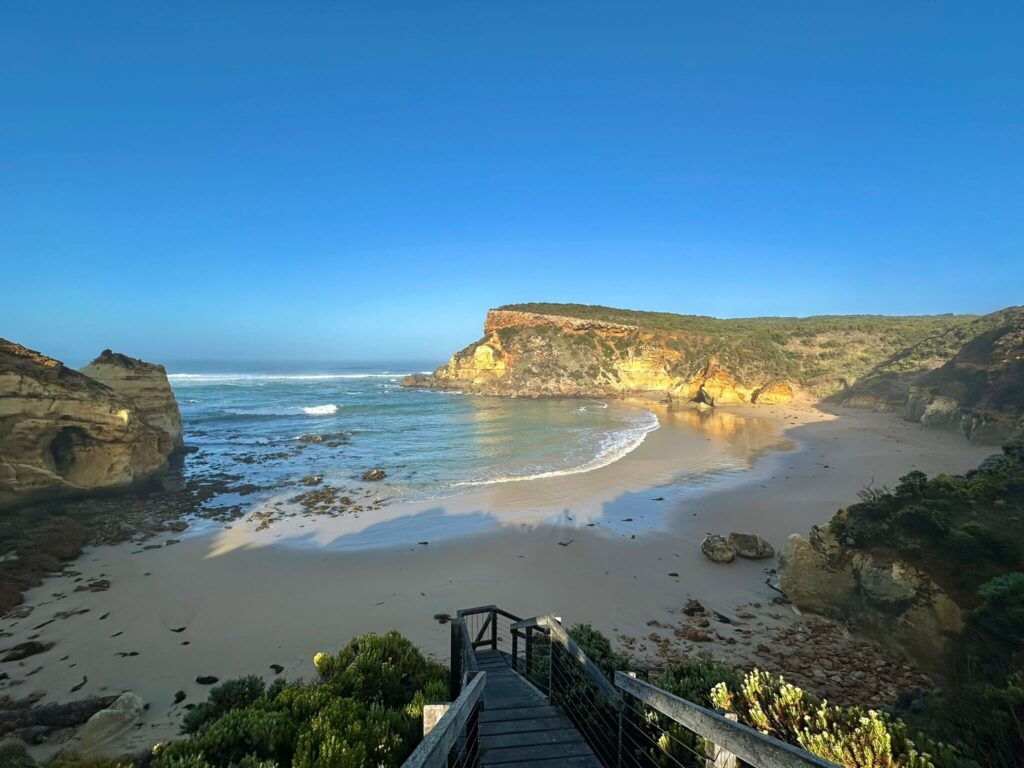
Childers Cove
Our first stop was Childers Cove, a beautiful rocky beach that barely shows up on tourist maps. You do have to take a small detour off the main road, but in return we had this gorgeous beach all to ourselves, even though the sky was still a bit hazy in the early morning. A great start (or finish, if you drive it from east to west).
Bay of Islands and the Bay of Martyrs
Not much further on, we stopped at the Bay of Islands and the Bay of Martyrs. These spots remind you of the famous Twelve Apostles in terms of landscape, but they’re much quieter. The Bay of Martyrs was so accessible we could almost take a photo from inside our camper. We still took a moment to pull in at the well-built parking areas and have a look. Pretty much all highlights between Warrnambool and Apollo Bay are clearly signposted and have their own parking area. Often with parking spaces for large vehicles: perfect for a camper, bus, or a car with a trailer. That’s one of Australia’s big advantages!

The Grotte
Our road trip continued to The Grotto, a kind of natural arch in the rocks. We walked down the steps to see it up close. The water here was noticeably calm compared to other places along the coast. We did have to be a little patient for a photo without other visitors. Still, a bit of a preview of the crowds that would come later.

London Bridge
The next stop was London Bridge. This is a natural bridge with a fascinating story. For years, this rock formation connected the mainland to a rock stack out at sea, until the middle section suddenly collapsed in 1990. Two tourists who were standing on the outer section at the time survived against all odds and had to be rescued by helicopter! The remaining part of this iconic formation is still beautiful to see.
Loch Ard Gorge
After that, we drove on to Loch Ard Gorge, named after a ship that was wrecked here in 1878. From one large car park you can explore several rock formations. Day tours stop here too, so expect plenty of tourists (especially Asians).

You can easily walk to this built platform to see the Twelve Apostles. A photo of the Twelve Apostles is at the top of this blog!
The Twelve Apostles
And then it was time for the absolute highlight: the Twelve Apostles. These limestone pillars rising from the sea are the icon of the Great Ocean Road. Ironically, there have never been twelve Apostles. Originally there were nine, and due to erosion only eight are still standing today. Another one collapsed in 2005. Anyway, a fun fact you can tell at home.
We arrived on a Friday around lunchtime and noticed the car park at the Twelve Apostles was already starting to fill up. Coach buses packed with day-trippers from Melbourne were rolling in. It’s not the most famous stop on the Great Ocean Road for nothing. You can feel it in everything, and secretly that’s a bit of a shame. There’s a lot of construction happening around this spot to accommodate even more visitors in the future.
From here you’ll also see loads of helicopters. Many tourists book the world-famous helicopter flight over the Twelve Apostles and the Great Ocean Road from here. If you’re interested, you’ll find the options here. I’d definitely book ahead, because it looked busy!

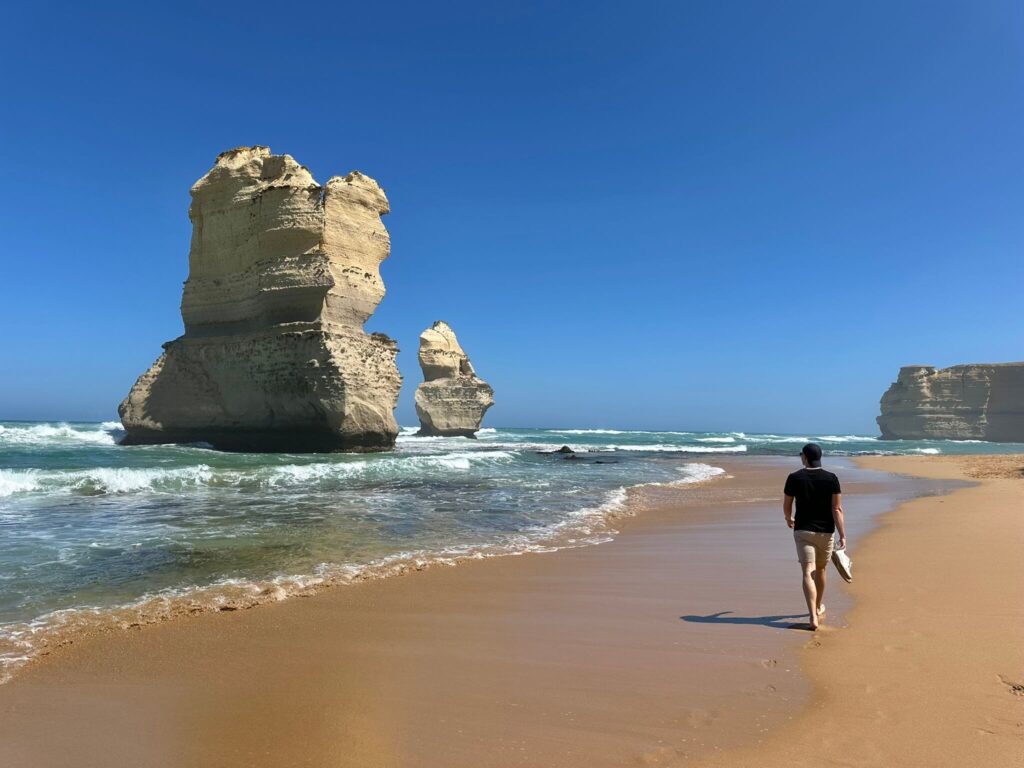
Gibson Steps
For a different perspective of the Apostles, we climbed down via the Gibson Steps. These are 86 steps down to the beach. From here you get a completely different sense of the sheer scale of these rock formations. Another bonus: the tour buses don’t come here. They don’t have time for it. Take a beautiful beach walk and enjoy the very best of the Great Ocean Road: beach & stunning rocks!
There’s a car park at the Gibson Steps, but it’s very small. The walk from the large car park at the Twelve Apostles (which we did) is pretty boring and takes quite a bit of time. So if your vehicle isn’t too long, or your driving skills are simply excellent, I’d drive to the Gibson Steps car park.
Staying in Apollo Bay
After all these impressive views, we drove on to Apollo Bay, a lovely coastal town where we’d be staying for two nights. This town has a great selection of restaurants, bars and the necessary supermarkets. Our campground, Apollo Bay Holiday Park, was in a great location to walk into town for dinner in the evening.
Day 2: waterfalls in Otway National Park (from Apollo Bay)
We chose to take a day trip to Otway National Park from Apollo Bay. What many people don’t know is that you drive through an enormous rainforest when you take the Great Ocean Road. And in this rainforest, you can visit some seriously cool waterfalls!
Let’s start with the drive to our stops… we turn off the Great Ocean Road inland, and before long we see a sign saying the road isn’t suitable for caravans and vans… Well, it turned out to be a challenging day for my driving skills! Winding mountain passes, narrow roads, and constantly hoping there wouldn’t be oncoming traffic. Then came off-road gravel tracks too… not my favourite in a camper, but secretly also one of the most beautiful routes to drive. Look, you’re allowed to take a camper in, but they do warn you to be careful.
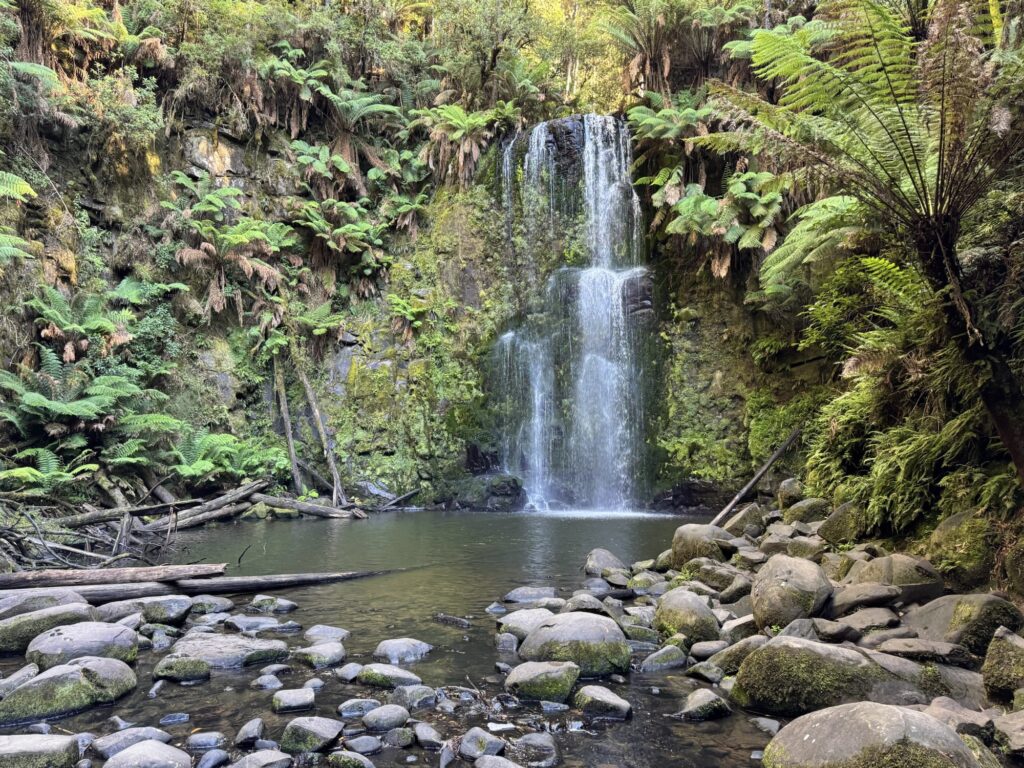
Beauchamp Falls
The first waterfall we hiked to was Beauchamp Falls. An impressive waterfall that’s about 20 metres high and tumbles over a series of rocks in a picture-perfect rainforest setting. The track winds through lush rainforest, which really gives you that proper jungle vibe. The trail itself is relatively steep in places, but the view of the waterfall at the end is more than worth the effort.

Hopetoun Falls
The second waterfall was Hopetoun Falls. It’s about 30 metres high and crashes dramatically down over the rocks. The walk down to the base of the waterfall is around 1.5 km (about 30 minutes), but it’s steep, so you do have to put in a bit of effort to get down there. But once again, we’re walking through the rainforest with all the bird and cricket sounds. It reminded us of New Zealand!
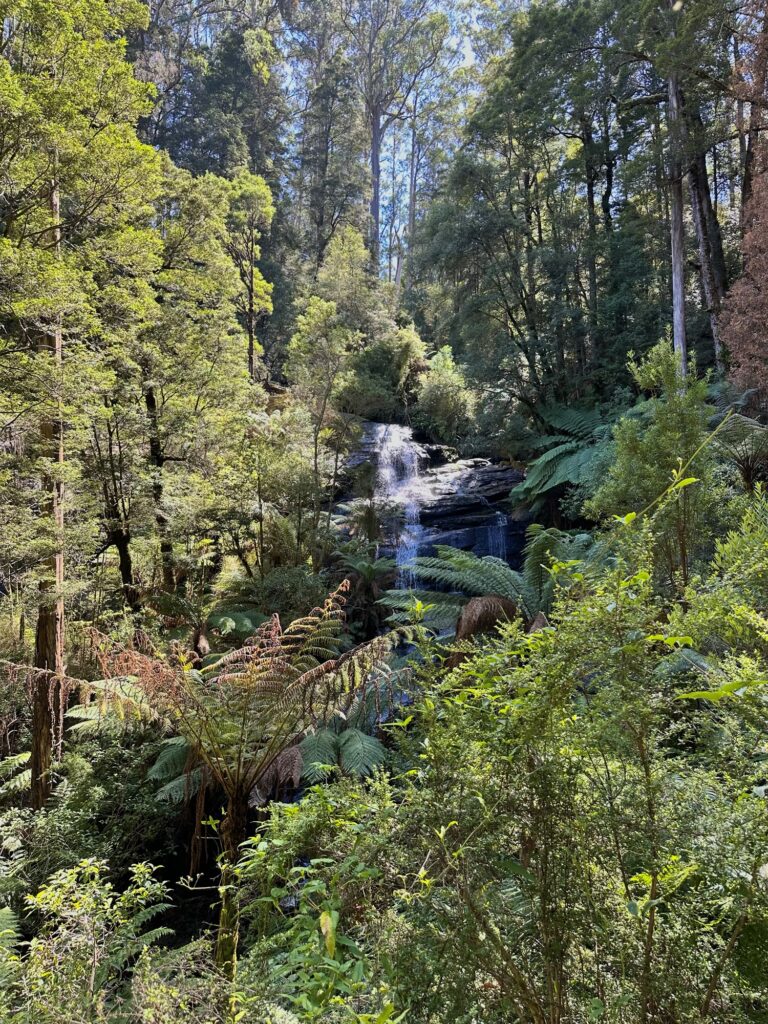
Triplet Falls
The third place we went hiking was Triplet Falls. This walk was highly recommended in blogs, so our expectations were high. The falls consist of three separate cascades tumbling over rocks in a lush forest. That lush forest had become so overgrown, though, that we had little to no view of the waterfalls — such a shame! Still, another lovely walk through the bush.
This made for a nice loop from and back to Apollo Bay, and we slept here for a second night. Between the driving and the stops, you can easily spend a full day on this. A really fun day trip, if you ask me!
Day 3: Apollo Bay to Melbourne: winding roads and lots of beaches
After a good night’s sleep in Apollo Bay, we started the second part of our Great Ocean Road adventure. This section of the route is known for its winding roads, dense rainforests and spectacular lookouts.
On this day, we did notice you’d rather drive the route the other way around. You can stop much more easily at all the little bays along the way. When you’re driving on the left-hand side, you often can’t and aren’t allowed to pull in there. On the other hand, because it was the weekend, it was so busy that the traffic in the opposite direction was crawling for long stretches around the towns and villages.
Cape Patton Lookout Point
We first stopped at Cape Patton Lookout Point for a breathtaking view over the ocean. It was a short stop — just stepping out of the camper and taking in the view. After that, we passed Kenneth River. Here you can spot koalas in the wild. We skipped it because we’d already seen koalas in the days before, but it can definitely be a fun stop.

Sheoak Falls
A little further along, we did stop for Sheoak Falls. A waterfall with a beautiful dark rock backdrop. You’ll find a small roadside car park and then it’s about a 15-minute walk this way. Unfortunately, the waterfall wasn’t very strong at the end of summer, but hey — still a nice stop.
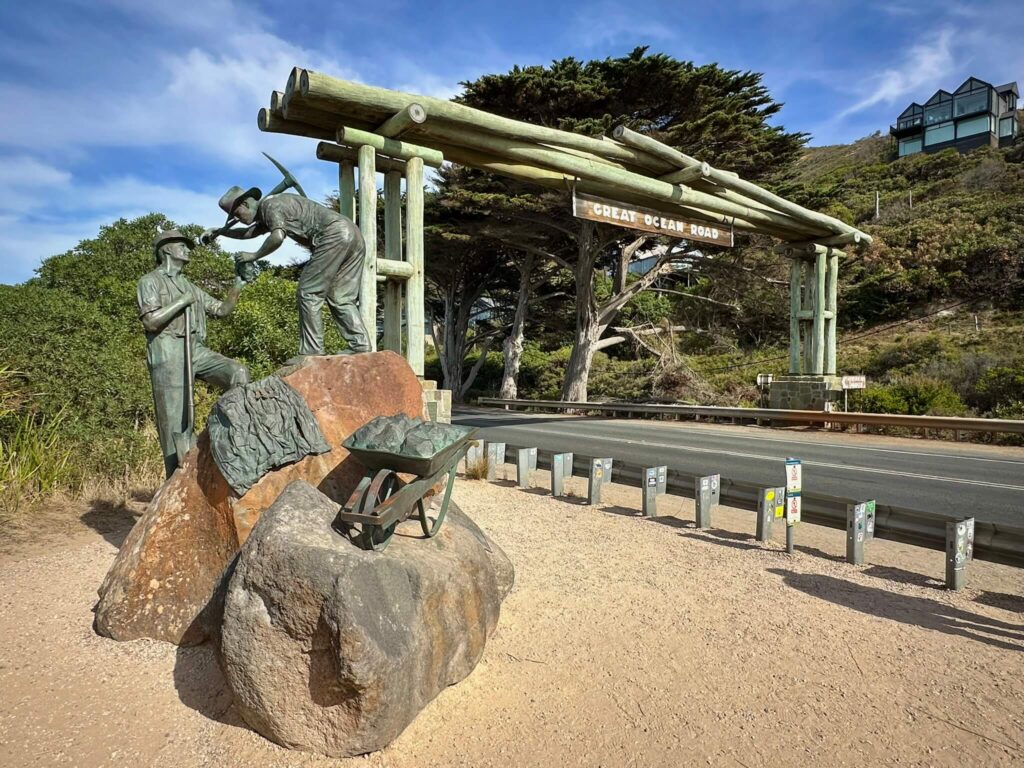
Great Ocean Road Memorial Arch
Back on the road, we passed the Great Ocean Road Memorial Arch. This iconic arch officially marks the start of the Great Ocean Road (if you’re driving from east to west). The arch was built in memory of the soldiers who constructed this road after World War I — more on that later in this blog. Because we were driving in the ‘wrong’ direction, we saw the back of the arch first and parked the camper in the car park. It was absolutely packed with tourists… so consider yourself warned. I could barely squeeze the camper in.
The Great Ocean Road Chocolaterie & Ice Creamery
After a long day of driving and lots of impressions, we decided to treat ourselves at The Great Ocean Road Chocolaterie & Ice Creamery. This place is heaven for chocolate lovers! Hundreds of types of chocolate in every imaginable shape and flavour. We enjoyed what they claimed was ‘the best brownie’ — and we have to admit, they were right. Rich but divine. The portions here are big… so it quickly turns into a calorie cheat day.
In the meantime, we also drove past plenty of famous beaches. But it was a long weekend because of a public holiday and a Sunday… so parking the camper anywhere turned out to be impossible. On this day we really noticed the downsides of driving the ‘wrong way’. It was hard to make quick little stops because we were on the other side of the road.
Torquay
We eventually reached Torquay, officially the starting point (or in our case, the end point) of the Great Ocean Road. This lively coastal town is known as the birthplace of surfing in Australia and is home to famous surf brands like Rip Curl and Quiksilver. From here, it was another 105 kilometres (a bit over an hour’s drive) to Melbourne, where we had reserved a spot at a campground just outside the city centre.
Camping in Melbourne
Because it had turned into a scorching hot day by then (36 degrees!), we decided to spend the afternoon at the campground pool. In the evening, we hopped into an Uber to Melbourne’s city centre, where we randomly ended up at a huge festival with live music, an amusement park, food trucks, waterski competitions and a spectacular fireworks show. A perfect ending to our Great Ocean Road adventure!
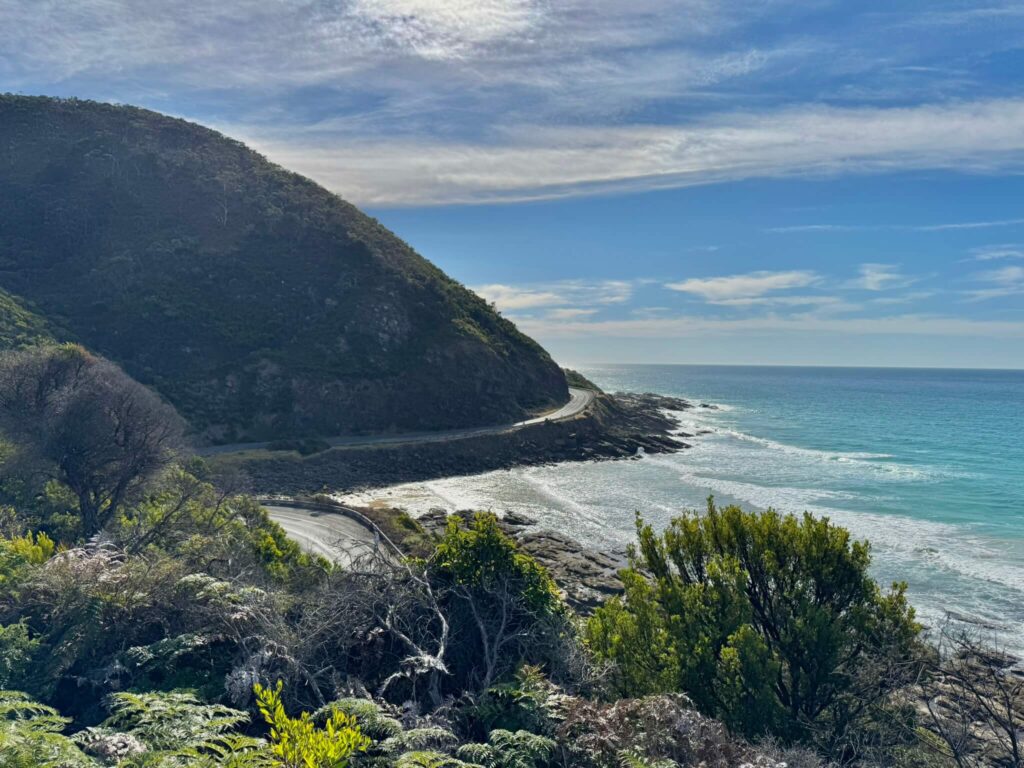
East to west or west to east: which is better?
One of the most frequently asked questions about the Great Ocean Road is: which direction should you drive? For days 1 & 2 of our itinerary, it didn’t really matter. Everything involved turning off into a car park, so it was easy enough. You might even have an advantage, because our side of the road was a lot quieter. Only on day 3 did we notice some downsides. You drive along the coast with lots of short stops (think: room for about two campers), and you can’t squeeze in if you’re on the wrong side. On the other hand, that side of the road felt about 10x busier than ours, especially with locals out for the weekend! Personally, I found day 1 by far the most beautiful day of the route, and I enjoyed that the most. Most importantly: don’t miss Great Otway NP!
Benefits of driving west to east
- You avoid the crowds – Most day tours from Melbourne drive east to west. By driving in the opposite direction, you won’t be stuck behind them
- You end in the fun coastal towns – After all the natural beauty, you finish in lively surf towns like Lorne, Anglesea and Torquay, perfect for a relaxed finale.
Benefits of driving east to west
Of course, there are also reasons to follow the traditional route from east to west:
- You follow the official route – The Great Ocean Road was built from east to west, and the milestones and information signs are placed in that direction.
- You build up to the highlights – The route becomes more spectacular the further west you drive, with the Twelve Apostles as one of the main highlights.
- You can stop at all the little bays during the first part of the Great Ocean Road (between Torquay and Apollo Bay) – as mentioned earlier, you can make more quick stops here. The downside is that the road is much busier.
Our tip? Do what fits your planning. You can visit all the highlights in either direction!
Construction at the Twelve Apostles: what you need to know
During our visit in March 2025, there was quite a bit of construction happening at the Twelve Apostles. The iconic lookout is undergoing a major upgrade to better handle the flow of tourists.
The Twelve Apostles attract more than 2 million visitors every year, and the old infrastructure simply wasn’t designed for numbers like that. The Australian government is investing heavily in new facilities, including:
- A new, larger visitor centre
- Improved walking tracks and lookout platforms
- More parking spaces
- Better accessibility for visitors with disabilities
Hopefully you’ll benefit from it!
The history and popularity of the Great Ocean Road
The Great Ocean Road isn’t just a road — it’s the world’s longest war memorial. Construction began in 1919 as a project to provide work for returned soldiers from World War I. Using only hand tools and sheer muscle power, these men carved a road out of the rugged cliffs of Victoria’s coastline.
It was tough work in challenging conditions. The workers camped in tent camps along the route and faced the elements while they forced a path through the harsh landscape. After 13 years of hard labour, the road was officially opened in 1932. What started as an employment project transformed into one of Australia’s most iconic tourist attractions.
Alright — you now know everything about the iconic Great Ocean Road. Plan 2 to 3 days for this trip and enjoy all the stunning views. Try to avoid weekends if you can, and most of all: soak up those incredible landscapes!

South Australia & Tasmania in Google Maps
We make your road trip easy by sharing 300+ sights from Tasmania and South Australia (from Adelaide to Sydney) with you via Google Maps. Save the map and create your own route!
€ 2.95

