


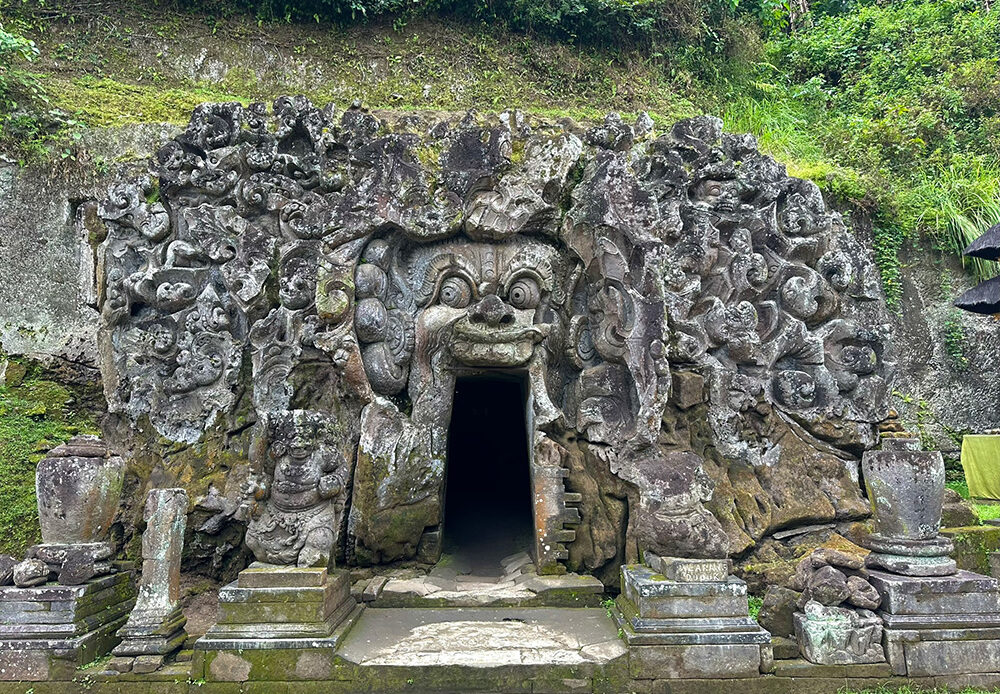
On the itinerary: Goa Gajah, also known as the Elephant Cave. The name alone makes you curious. And once you arrive, you immediately feel this is not just any temple. This place breathes mystery, history and spirituality. Goa Gajah lies just outside Ubud, on the eastern side of the village of Peliatan. It is a place you can visit in under an hour, but one that stays with you for much longer. Especially after what happened to us here… something involving an earthquake.
Contents
A sanctuary with history
The history of Goa Gajah goes back at least to the 11th century, although some parts may be even older. The cave was rediscovered in 1922 by Dutch archaeologists. For centuries the complex lay hidden under soil and jungle. The cave most likely served as a meditation place for Hindu priests, but you also find Buddhist influences here, which is quite rare in Bali.

When you arrive, you walk down a small path, surrounded by tropical greenery, old trees and the sound of trickling water. And then you see the highlight of Goa Gajah: the cave entrance in the shape of an elephant. An impressive carved face in the rock, with big eyes, curled eyebrows and a wide open mouth. That mouth is the entrance to the cave. Stepping inside feels pretty intense.
Inside it is cool and dark. You smell incense and hear your own breathing. In the T‑shaped space you see statues of Ganesha (the god with the elephant head) and Shiva lingams, symbols of creation and power.
Between statues, pools and… shaking ground
Outside the cave lies a beautifully landscaped area with stone staircases, paths, holy baths and carvings. There are large stone statues of women with pitchers, from which water flows into a basin. This fountain symbolizes purification and is still considered sacred.
Big ferns, palms and bright green moss grow on the old walls. It is the kind of place where you quickly sit down for a moment just to take everything in. Along the edges of the complex a small river flows, and if you walk further down you reach more ruins and a small waterfall.
And then… the ground started to shake.
We had just stopped for a moment at one of the fountains when we felt something strange. At first I thought I was imagining the ground moving. But we looked at each other: “Do you feel this too?” Even a local standing a bit further away looked around in surprise. It only lasted a short time – at most fifteen seconds – but it felt much longer. In that moment I mainly watched the locals: is this normal or not? He stayed calm, so we did too.
An earthquake, here in Bali. We had experienced one before in Iceland, but did not expect it at all here. After that, everything quickly went back to normal. The few people who were there simply continued what they were doing. But for us, the visit to Goa Gajah suddenly had an extra layer.

Practical tips for Goa Gajah
Goa Gajah is easy to reach if you are staying in Ubud. It is about a 10‑minute drive away and is ideal as a short stop on a day trip. If you are in Ubud for longer, you can easily go back and forth with a Grab or a taxi.
Also make sure to walk further down in the complex, because there you will find another beautifully landscaped green area you can walk through!
- Location: Just outside Ubud, in the direction of the village of Bedulu
- Opening hours: Daily from 08:00 to 18:00
- Entrance fee: Around 50,000 IDR per person (€ 3), sarong included
- Visit duration: Plan around 45 minutes to 1 hour
- Clothing: Sarong required (usually included in the ticket). Your shoulders must also be covered
- Best time: Go early in the morning or after 16:00 to avoid the biggest crowds and the heat
The temple complex lies in a valley, so you will need to walk up and down some stairs. Wear good shoes and bring a bottle of water. There are a few small stalls at the entrance for snacks and souvenirs, but do not expect a full restaurant.
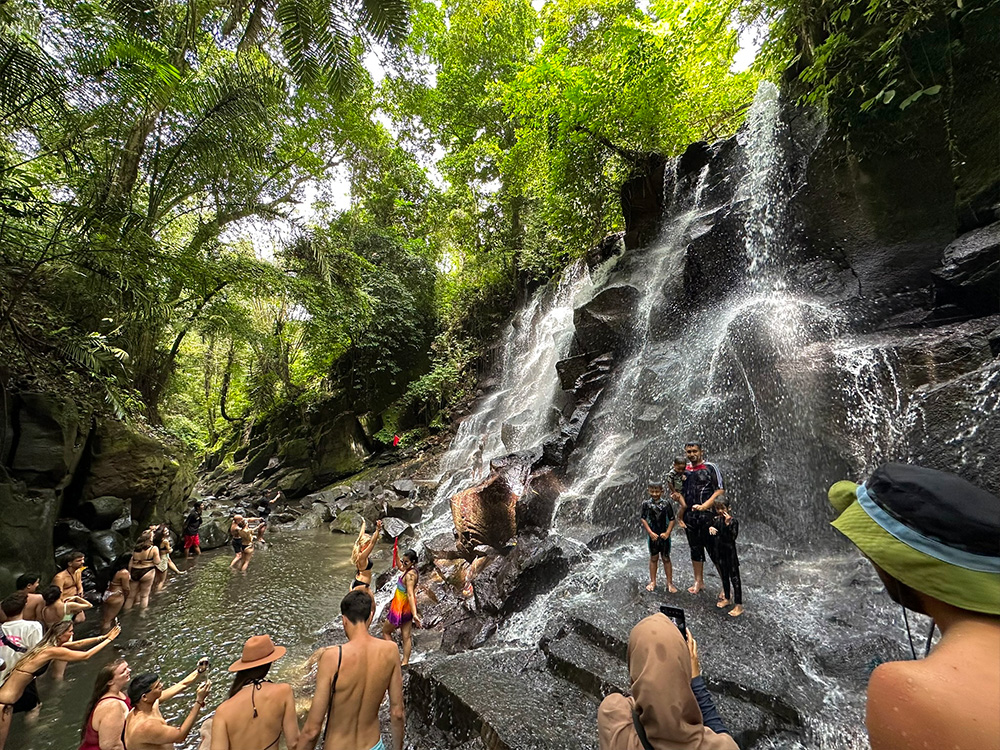

Our day tour: Goa Gajah, Kanto Lampo & Tirta Empul
We combined our visit to Goa Gajah with two other special places in the area. After visiting the Elephant Cave we drove on to the Kanto Lampo waterfall. This waterfall is quite touristy, because you can take very cool photos there. You literally stand in line for it. The water cascades down in layers over black rocks, and you can easily stand underneath for a refreshing shower. The staircase down is a bit tough, but you get a very photogenic spot in return.
To finish the day we continued on to Tirta Empul, a well‑known water temple where locals (and tourists) perform ritual cleansing in rows of fountains. It is an impressive sight to see how Balinese people quietly enter the water with their offerings. As a tourist you are allowed to take part as well, as long as you are dressed respectfully and follow the rules. It was a beautiful experience to witness.
Arrange a day trip with a local taxi driver, use the Grab app or book a small tour, whatever is easiest for you!
Is it best to stay in Ubud?
Ubud has many beautiful hotels and is just around the corner from Goa Gajah. You will find budget stays in town as well as luxury resorts with rice field views. We stayed at Korurua Villa, just outside Ubud. Being outside the town is no problem: the hotel offers a free shuttle into the centre.
1. Korurua Villa (quiet & stylish)
We stayed here ourselves: lovely rooms, a nice pool and a free shuttle into the centre. A real recommendation just outside the hustle and bustle.
💰 From € 60 per night
🔗 View on Booking.com
2. Inata Monkey Forest Ubud (central & affordable)
Want to stay right in the centre of Ubud? This hotel is within walking distance of all the highlights, yet still feels peaceful.
💰 From € 35 per night
🔗 View on Booking.com
3. Adiwana Bisma (luxury & views)
Luxury hotel with infinity pool and jungle views. Perfect if you want to really treat yourself for a bit.
💰 From € 140 per night
🔗 View on Booking.com
Is Goa Gajah worth it?
Goa Gajah may not be big, but it has a very special atmosphere. It is a great way to experience some of the local culture that Bali is so rich in. It is small, but fun to have seen. As mentioned earlier, you will be done within about an hour. That is why it is ideal to combine it in a day trip with several other stops.
And be honest: how often do you visit a temple where you walk in through the mouth of a stone demon, discover spiritual statues in the dark, and then also experience an earthquake? Okay, that last part is not something to wish for. It can have very nasty consequences.
Enjoy your visit to Goa Gajah Elephant Cave! And if you want to know more about Ubud: have a look at my blog with 7x things to do in Ubud.
