


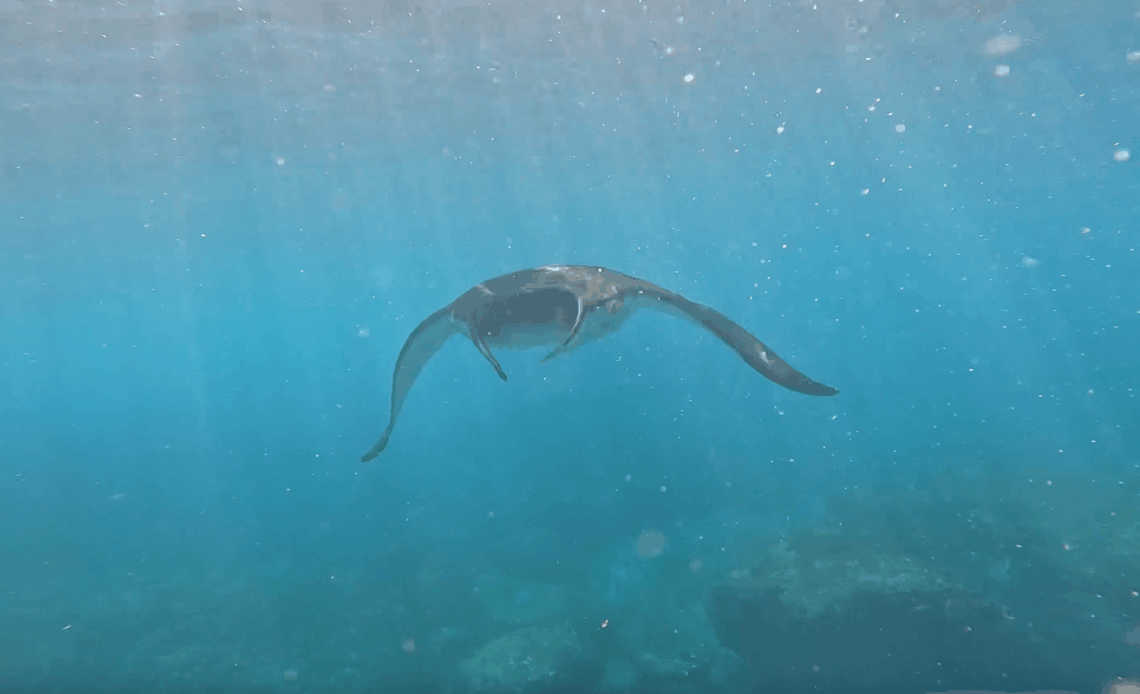
Do you also dream of swimming with manta rays in Bali? Then you really have to visit Manta Point on the island of Nusa Penida at least once. This is the place to see impressive manta rays of up to 8 metres wide from up close. I have been there myself and will take you through my experience. In my opinion, this is a true bucket list experience in Bali!
Contents
What are manta rays and where can you find them in Bali?
Manta rays, often simply called mantas, are impressive sea creatures that can grow up to eight metres wide. They have a flat, triangular shape and look a bit like large wings as they glide through the water. Mantas are completely harmless to humans – they do not have stingers like stingrays and only eat plankton. So when you see them, there is no need to be afraid. You can admire them safely from a distance! By now, most manta rays are also quite used to tourists around Bali. Of course, they are still wild marine animals.
Around Bali, you will find the highest number of manta rays near the Nusa Islands: Nusa Penida, Nusa Lembongan and Nusa Ceningan. They are drawn here because the water is rich in plankton. There are a few spots where you have a good chance of seeing manta rays:
- Manta Point Nusa Penida – the most famous spot, with almost guaranteed manta sightings
- Manta Bay Nusa Penida – a bit quieter, but also a good chance of manta rays
- Crystal Bay – often visited during snorkel tours, but less suitable for manta rays
- Gamat Bay – mainly popular for colourful coral and fish, not for manta rays
- Nusa Lembongan – many tours depart from here, but the manta rays themselves are usually found near Nusa Penida
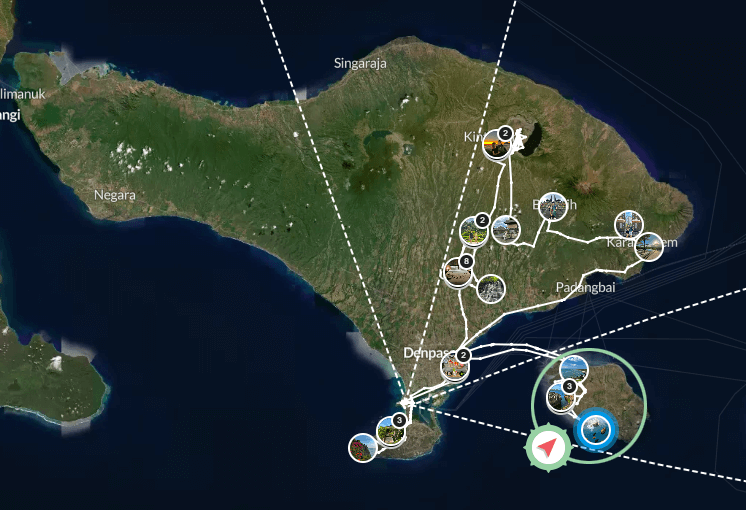
What do these spots have in common? They are all located around Nusa Penida. Officially, Nusa Penida is part of the province of Bali, but geographically it is a separate island located southeast of the ‘main island’ of Bali. It makes sense that many tourists take the boat from Bali to Nusa Penida to see manta rays, among other things!
Snorkeling at Manta Point, Nusa Penida
Around 09:00 we boarded a snorkel boat from Nusa Penida. The sun was already shining nicely and the sea was restlessly roaring. We were on our way to Manta Point Bali, where gigantic manta rays of up to 8 metres wide swim. Pretty impressive! And good to know: manta rays in Bali are not dangerous. They mainly eat plankton, so you can safely admire them from up close.
Once we arrived at Manta Point, we were immediately greeted by the first manta ray gliding gracefully beneath us. In the end, we spotted a total of five of these giants. It is truly magical to see how they float through the water – as if they are dancing. The water was quite rough though, so having some snorkelling experience definitely helps here.

Is it sad for the manta rays, with so many snorkellers?
Good question! As in many places in Indonesia, Manta Point Nusa Penida is quite touristy. Sometimes you are in the water with 50 people at the same time. I also asked myself for a moment: is swimming with manta rays in Bali actually responsible? But to be honest, the manta rays did not seem very bothered by it. They can very easily swim away if they want to. Still, it is important to be respectful towards these beautiful animals – keep your distance, do not touch them, and enjoy the experience without disturbing them.

Snorkeling at Gamat Bay
After our adventure at Manta Point, we continued to Gamat Bay. Here, the water is calmer and the underwater world is full of colourful coral and tropical fish. Most snorkel tours make several stops along the way. There is a good chance that you will also stop at Gamat Bay if you book a snorkel tour. On the way, we also spotted a group of dolphins – how cool is that?

Practical tips: how to book a snorkel tour
First of all, you need to get to the island of Nusa Penida or Nusa Lembongan. For that, you use the water taxi. You can read exactly how the water taxi works in my detailed blog about Nusa Penida.
Without a boat, you will not reach Manta Point, so booking a snorkel tour is a must. There are many operators, both from Sanur and from Nusa Penida and Nusa Lembongan. Pay close attention to the starting time and where you want to board. Would you rather snorkel with manta rays from Nusa Lembongan? That is possible too, but the chance of seeing manta rays is highest at Manta Point.
When is the Nusa Penida manta ray season?
You can spot manta rays at Nusa Penida all year round, but your best chance is from March to June. During this period, the water is a bit warmer and visibility is often better. But honestly? Even outside those months you can get lucky. Nature does whatever it wants. We visited in September ourselves and spotted several manta rays here.
Why do most people choose Manta Point to spot manta rays?
Very simple: at Manta Point Nusa Penida, the chance of encountering a manta ray is the highest. It is a kind of cleaning station in the sea, where small fish clean the mantas. Because of this, they often stay in the area a bit longer and swim just below the surface – ideal for snorkellers!
At the other spots, you have less certainty of seeing them, so anyone who really comes for the manta rays books a tour to Manta Point. Yes, it is a bit commercial with many tourists in the water, but the sea is big enough. In Bali, you are simply not the only tourist.
